
Table of Contents
- What Is a LabCorp Blood Test for TRT
- Understanding Total vs Free Testosterone Test
- Testosterone Blood Test Preparation: What You Need to Know
- How to Get TRT Prescription Online Through LabCorp
- Interpreting Your LabCorp Testosterone Results
- Normal Testosterone Ranges and What Optimal Means
- What Affects Your Testosterone Levels
- Next Steps After Your LabCorp Results
- Frequently Asked Questions
Last Updated: September 3, 2026
What Is a LabCorp Blood Test for TRT
A LabCorp blood test for TRT is a diagnostic lab test ordered to measure testosterone levels before starting or monitoring testosterone replacement therapy. The test quantifies how much testosterone your body is producing, forming the foundation of any legitimate TRT decision. Your doctor can’t prescribe testosterone without concrete lab evidence, a blood test tells you exactly where you stand.
LabCorp operates one of the largest clinical laboratory networks in the country, processing millions of tests annually. The test measures both total testosterone and sometimes free testosterone, depending on what your physician needs to understand your hormonal status.
At Socal Mens Clinic Virtual, we start every TRT evaluation with lab work. Our licensed California physicians use a lab-first approach, meaning we don’t make treatment decisions based on symptoms alone. A phlebotomist collects a small sample from a vein in your arm, the sample gets analyzed in the LabCorp facility, and results typically come back within 24-48 hours.
Understanding Total vs Free Testosterone Test
Total testosterone and free testosterone measure different things, and understanding the distinction matters.
Total testosterone is the sum of all testosterone in your bloodstream, including testosterone bound to proteins and unbound testosterone. The measurement is in nanograms per deciliter (ng/dL).
Free testosterone is the portion circulating unbound and available for your body to use. Only about 1-2% of your total testosterone is actually free, yet this is the testosterone that matters functionally (peer-reviewed research). You could have adequate total testosterone but low free testosterone and still feel symptomatic.
Many men get told their testosterone is “normal” based on total testosterone alone. Their total might be 450 ng/dL, which falls within a reference range, but their free testosterone could be low, explaining fatigue despite technically normal numbers.
Most standard testosterone tests measure total testosterone because it’s cheaper and faster. Free testosterone requires additional lab work using equilibrium ultrafiltration or mass spectrometry methods.
A quality TRT evaluation includes both measurements. Total testosterone tells you overall hormone production. Free testosterone tells you what your body can actually use. When you’re getting tested through Socal Mens Clinic Virtual, we typically order both to prevent misdiagnosis and ensure your treatment plan matches your actual hormonal picture.
Testosterone Blood Test Preparation: What You Need to Know
Preparation for a testosterone blood test is minimal, but timing and specific factors genuinely affect your results.
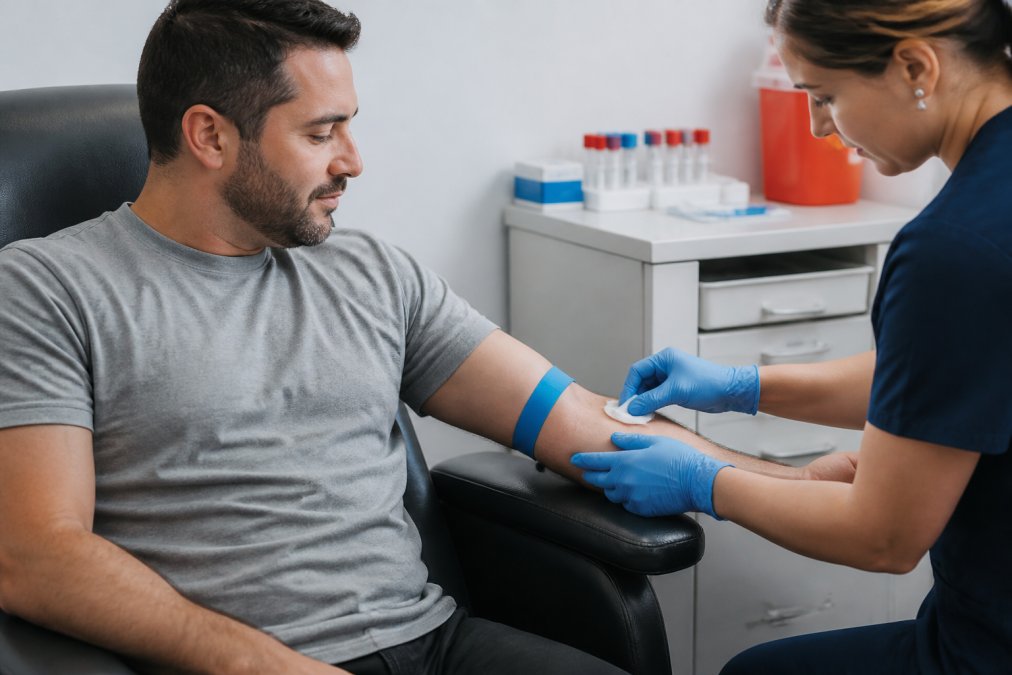
Fasting is typically recommended. Most testosterone tests should be drawn after an 8-12 hour fast with no food or beverages except water. Fasting reduces variables that could skew results.
Timing matters significantly. Testosterone follows a circadian rhythm, your levels are highest in the early morning, typically between 7-10 AM, and decline throughout the day. By evening, your testosterone can be 25-30% lower than your morning peak (peer-reviewed research). Schedule your draw in the morning; testing at 4 PM gives you a different number than testing at 8 AM.
Avoid strenuous exercise the day before. Intense workouts, particularly heavy resistance training, can temporarily elevate testosterone. Rest the day before your draw for an accurate baseline.
Avoid alcohol for 24 hours before testing. Alcohol can suppress testosterone levels acutely.
Medications and supplements matter. Certain medications and supplements affect testosterone levels. Mention anything you’re taking to your provider before testing.
Stress and sleep affect your numbers. Poor sleep the night before testing can lower your testosterone reading. Ideally, get a normal night’s sleep before your draw.
How to Get TRT Prescription Online Through LabCorp
Getting a TRT prescription through an online provider involves several structured steps.
First, you complete an initial consultation with a licensed physician. A legitimate evaluation includes detailed medical history, discussion of symptoms, and review of previous lab work. The doctor asks about energy levels, sexual function, mood, sleep quality, and physical performance, and screens for contraindications to TRT.
After the consultation, the physician orders lab work through LabCorp. You schedule a blood draw at a local LabCorp collection center, provide your sample, and the lab processes it. Results come back within 1-2 business days.
Your physician reviews the numbers and decides whether TRT is appropriate based on your testosterone levels, symptom profile, and overall health picture. A real physician won’t prescribe based on labs alone, they consider your clinical picture. If your testosterone is 350 ng/dL with no symptoms, some providers might recommend lifestyle changes instead of immediate medication. If your testosterone is 250 ng/dL with significant fatigue, erectile dysfunction, and mood changes, TRT becomes reasonable.
At Socal Mens Clinic Virtual, our licensed California physicians conduct thorough evaluations, order LabCorp testing, and review your results in context of your symptoms and health history. The prescription comes after this evaluation. Your physician writes the prescription, you receive it, and you fill it through a pharmacy. The entire process typically takes 1-2 weeks from initial consultation to prescription in hand.
Interpreting Your LabCorp Testosterone Results
Your testosterone results come back as a number, usually in ng/dL. That number means nothing without context.
A typical lab report shows your result alongside a “reference range.” For total testosterone, reference ranges typically fall between 300-1000 ng/dL, though this varies slightly between labs.
Here’s the critical insight: “normal” and “optimal” are not the same thing. Your testosterone could be 400 ng/dL, which falls within the reference range, but might be suboptimal for you. If you’re experiencing fatigue, low libido, and difficulty building muscle despite training consistently, a testosterone level of 400 might be contributing to those symptoms.
This is why the clinical picture matters. A physician who only looks at whether your number falls in the reference range is missing the point. They need to consider your symptoms, age, baseline health, and how you feel at that testosterone level.
If you received results showing low testosterone (typically under 300 ng/dL) alongside symptoms like persistent fatigue, reduced libido, difficulty gaining muscle, or mood changes, those results warrant discussion with your physician about treatment options.
Free testosterone results are reported in pg/mL (picograms per milliliter). Reference ranges typically fall between 8-25 pg/mL. Low free testosterone, even with adequate total testosterone, can cause symptoms.
When you get your results, ask your provider to explain them in plain language. A good physician makes this clear.
Normal Testosterone Ranges and What Optimal Means
For adult men, total testosterone typically ranges from 300-1000 ng/dL. Men under 30 often cluster in the 600-900 range. As men age, testosterone naturally declines, roughly 1% per year after age 30 (peer-reviewed research). A 50-year-old man with testosterone of 450 ng/dL is different from a 25-year-old with the same number.
Age-adjusted reference ranges exist for this reason. A 55-year-old man might have a reference range of 250-850 ng/dL, while a 25-year-old has 300-1000 ng/dL.
Free testosterone reference ranges typically fall between 8-25 pg/mL for adult men.
The reference range represents the statistical average of the population tested, not necessarily the level where you feel your best. Many men feel significantly better with testosterone in the 600-800 ng/dL range compared to 400 ng/dL, even though both are technically normal.
Your optimal testosterone level is individual, depending on your genetics, age, baseline health, and how your body responds to different hormone levels. A quality physician helps you identify your optimal level through careful evaluation and, if treatment is appropriate, gradual adjustment until you feel your best.
What Affects Your Testosterone Levels
Multiple factors influence testosterone production and circulating levels.
Age is the primary driver. Testosterone peaks in your late teens and early 20s, then declines gradually after age 30. This is normal biology.
Sleep quality directly impacts testosterone. Men who sleep 6 hours or less per night have significantly lower testosterone than men sleeping 7-9 hours. Improving sleep often improves testosterone naturally.
Body composition influences testosterone. Excess body fat increases aromatase enzyme activity, which converts testosterone to estrogen. Reducing body fat through diet and exercise can improve testosterone levels naturally.
Chronic stress suppresses testosterone. Elevated cortisol from prolonged stress inhibits testosterone production. Stress management, exercise, meditation, and adequate sleep can help restore testosterone naturally.
Medications and substances affect testosterone. Opioids are particularly problematic. Alcohol suppresses testosterone acutely. Your physician should review anything you’re taking.
Resistance training stimulates testosterone production, particularly heavy compound movements. Endurance exercise at very high volumes can suppress testosterone.
Underlying health conditions impact testosterone. Thyroid disorders, metabolic syndrome, type 2 diabetes, and other conditions affect testosterone production.
Nutritional deficiencies matter. Low zinc, vitamin D deficiency, and inadequate caloric intake can suppress testosterone.
Next Steps After Your LabCorp Results
Once you have your results and a conversation with your physician, the path forward depends on what the numbers show and how you feel.
If your testosterone is low and you’re symptomatic, your physician might recommend TRT. You’ll discuss treatment options, dosing frequency, expected timeline to feel effects, and monitoring requirements. Most men on TRT require periodic lab work to ensure the treatment is working and not causing adverse effects.
If your testosterone is low but you’re asymptomatic, your physician might recommend lifestyle modifications first. Improving sleep, reducing stress, losing body fat, and increasing resistance training can naturally improve testosterone. You’d retest in 8-12 weeks to see if these changes moved your numbers.
If your testosterone is in a gray zone and you’re experiencing symptoms, the decision becomes more nuanced. Some men benefit from TRT in this range. Others benefit more from lifestyle modifications.
If your testosterone is normal and you’re asymptomatic, you probably don’t need TRT.
The key is ongoing communication with your provider. TRT requires monitoring, adjustment, and regular reassessment. Your physician should check in periodically, retest your levels, and adjust your treatment if needed.
At Socal Mens Clinic Virtual, ongoing medical support is built into every plan. You have access to your physician for questions, adjustments, and monitoring.
If you’re experiencing persistent fatigue, low libido, difficulty building muscle, or mood changes, a testosterone blood test through LabCorp can provide concrete answers. Get started with Socal Mens Clinic Virtual and work with licensed California physicians who use a lab-first approach to create personalized treatment plans based on your unique biological data. Our virtual platform makes evaluation convenient, and our ongoing medical support ensures you understand your results and see real improvements in energy, muscle growth, sexual function, and overall well-being.
Frequently Asked Questions
What blood tests do I need while on TRT?
While on TRT, you’ll need regular monitoring through a hormone panel that includes total testosterone, free testosterone, and sex hormone-binding globulin (SHBG). Additional tests like estradiol, hematocrit, and PSA may be ordered depending on your individual health profile and how your body responds to treatment. Your physician will determine the specific tests and frequency based on your baseline results and treatment progression.
Can I order my own testosterone blood tests through LabCorp OnDemand?
LabCorp OnDemand allows you to order certain testosterone tests without a physician’s order, but for TRT treatment and prescription purposes, you need a licensed physician’s order. Virtual clinics like Socal Mens Clinic Virtual provide that medical oversight, ensuring your tests are clinically appropriate and your results are interpreted by a qualified provider who can guide your treatment plan.
How long does it take to get LabCorp blood test results?
LabCorp typically returns testosterone results within 1-2 business days, though some tests may take longer depending on the specific panel ordered. Turnaround times can vary based on your location and test complexity. Your physician will inform you of expected timing when your test is ordered, and most virtual clinics follow up with you once results are available to discuss findings and next steps.
Do I need to fast before a testosterone blood test?
Fasting is not strictly required for testosterone testing, but many physicians recommend a fasting blood draw (8-12 hours without food or drink except water) to ensure consistency and accuracy. Timing matters: testosterone levels follow a circadian rhythm and are typically highest in the morning. Drawing your blood early in the day, ideally fasting, provides the most reliable baseline for comparison and treatment decisions.
This article was written using GrandRanker