
Table of Contents
- Understanding Common Side Effects of Testosterone Injections
- Testosterone Injection Frequency and Side Effects: Finding Your Optimal Schedule
- Managing Hematocrit Levels on Testosterone: Blood Monitoring Essentials
- TRT Injection Site Pain Relief: Technique Optimization and Recovery
- Managing Mood, Sleep, and Skin Changes During TRT
- Fertility and Prostate Health: What You Need to Monitor
- When to Contact Your Physician About Side Effects
- Frequently Asked Questions
Last Updated: October 3, 2026
Understanding Common Side Effects of Testosterone Injections
Testosterone replacement therapy improves energy, mood, and muscle growth, but managing side effects of testosterone injections is crucial for long-term success. Socal Mens Clinic Virtual helps patients address these effects. (Source: normal hematocrit for men)
Common side effects include acne, mood swings, sleep problems, blood thickness changes, injection site soreness, and libido shifts during the first few weeks. Most are manageable with the right approach.
Many men don’t realize that managing side effects of testosterone injections gets easier after the first month. Your body adapts. The key is not stopping treatment prematurely, give it time while addressing issues as they arise.
Testosterone Injection Frequency and Side Effects: Finding Your Optimal Schedule
Injection frequency directly affects hormone stability and side effects. Weekly injections provide moderate stability with slight mid-week dips. Every 10 days causes more noticeable energy swings. Twice-weekly injections (3.5 days apart) provide the smoothest hormone curve and minimize peaks and valleys that trigger side effects, though they require more commitment.
Starting low and increasing gradually helps your body adjust; rapid escalation causes more acne and mood changes.
| Injection Schedule | Hormone Stability | Common Experience |
|---|---|---|
| Every 7 days | Moderate | Steady energy, slight mid-week dip |
| Every 10 days | Lower | More noticeable energy swings |
| Twice weekly | High | Consistent mood and energy |
Skipping doses or going longer between injections amplifies side effects. Hormone levels crash, triggering fatigue, mood dips, and joint aches. Consistency matters more than the exact timing.
Managing Hematocrit Levels on Testosterone: Blood Monitoring Essentials
Managing hematocrit levels on testosterone is one of the most important safety steps you’ll take.
Normal hematocrit for men is 41-50%. On testosterone, levels can rise to 52-55% or higher. Most physicians recommend action at a certain level.
Common steps to lower hematocrit include:
- Donating blood (the fastest way to bring levels down)
- Reducing injection frequency or dose
- Increasing water intake
- Adding cardiovascular exercise
- In some cases, reducing testosterone temporarily
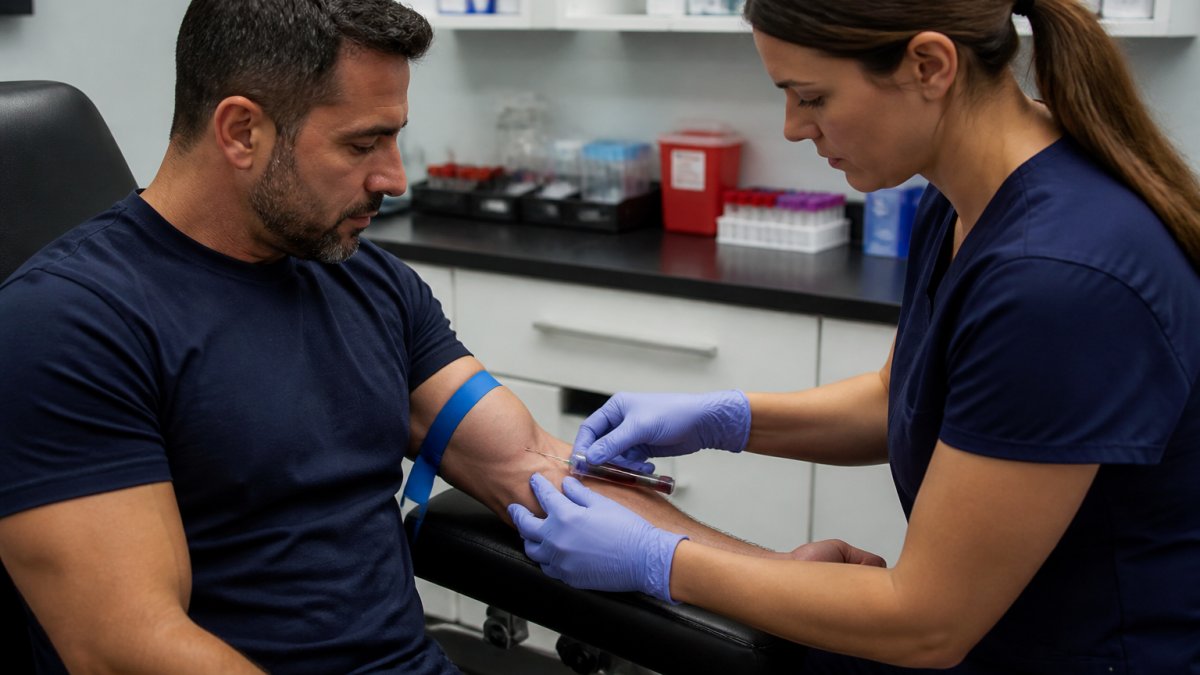
Never skip blood work on testosterone. Catching elevated hematocrit early prevents serious complications down the road. It’s the single most important safety measure.
TRT Injection Site Pain Relief: Technique Optimization and Recovery
Injection site pain usually stems from technique, needle selection, or post-injection care, not the injection itself. Systematic changes eliminate discomfort for most men.
Needle Selection and Injection Technique
Preparation reduces pain dramatically:
Warm the vial in your hand or warm water for 2-3 minutes before drawing. Cold oil requires more force to inject, causing tissue trauma.
Draw slowly over 10-15 seconds to avoid air bubbles and increased injection pressure.
Inject slowly over 5-10 seconds. Fast injection creates pressure waves that trigger soreness and inflammation; slow injection allows tissue to accommodate the oil gradually.
Insert the needle at 90 degrees (perpendicular to skin). Shallow angles increase tissue trauma. Pause 1 second after insertion to allow tissue to settle before injecting.
Swab the injection site with an alcohol pad and allow it to air-dry completely (30-60 seconds). Do not blow on the site; this recontaminates it.
Site Rotation: The Foundation of Pain-Free Injections
Rotating injection sites prevents scar tissue buildup, chronic inflammation, and sterile abscess formation, the primary cause of persistent injection site pain beyond day 3.
Recommended four-site rotation (for twice-weekly injections):
- Right glute (upper outer quadrant): Locate the upper outer quarter of the buttock; this is the safest intramuscular site, away from the sciatic nerve.
- Left glute (upper outer quadrant): Mirror of the right side.
- Right quad (outer thigh): Inject into the outer thigh, roughly 4-6 inches above the knee and 4-6 inches from the front of the thigh. This is the vastus lateralis muscle.
- Left quad (outer thigh): Mirror of the right side.
Rotation schedule: Use each site once every 4 weeks minimum. If injecting twice weekly, you cycle through all four sites in two weeks, then repeat.
Mark your sites. Some men use a washable marker to lightly mark injection sites, rotating them systematically.
Post-Injection Recovery Protocol: The Critical First 24 Hours
What you do immediately after injection determines whether you experience soreness or not. Most injection site pain is manageable with proper post-injection care.
Immediately after injection (0-5 minutes):
- Apply light pressure with a clean cloth for 30-60 seconds to prevent oil leakage and reduce inflammation. Do not massage aggressively.
- Do not apply ice immediately. Ice constricts blood vessels and traps oil in tissue. Wait 2-4 hours before applying ice if soreness develops.
First 2 hours post-injection:
- Gentle movement (walking, light stretching) encourages oil dispersion and reduces lump formation. Staying still allows oil to pool, causing localized inflammation.
- Avoid heat for the first 2-4 hours; it increases inflammation acutely. After 24 hours, heat can relax muscle tightness.
- Avoid heavy lifting or intense exercise for 4-6 hours to prevent bleeding into the injection site.
Hours 2-24 post-injection:
- Apply ice for 10-15 minutes, 2-3 times if soreness develops.
- Gentle massage around the injection site (after 4 hours) encourages oil dispersion and prevents lumps.
- Optional: wrap loosely with an elastic bandage for 24 hours to reduce swelling, or elevate the limb if swelling occurs.
After 24 hours:
- Switch to heat if tightness persists; it increases blood flow and aids healing.
- Continue light activity like walking and stretching. Avoid the injected muscle for 48 hours if possible.
Troubleshooting Persistent Injection Site Pain
Pain lasting 3-7 days: Likely causes include needle too short, injection too fast, site not rotated, or oil not warmed.
Lumps or nodules: These are oil deposits from insufficient post-injection movement, injection into scar tissue, or too-shallow injection.
Bruising: This indicates bleeding into the tissue, usually from injecting through a blood vessel or too-aggressive post-injection activity.
Redness or warmth beyond 48 hours: This may indicate infection or sterile abscess.
If soreness lasts longer than a week, your technique may need adjustment. Work with your physician to observe your injection and identify potential issues.
Managing Mood, Sleep, and Skin Changes During TRT
Testosterone affects your brain chemistry, sleep patterns, and skin health. These changes are real, but they follow predictable patterns and respond well to targeted strategies.
Mood and Emotional Changes: Timeline and Management Strategies
Mood shifts during the first 4-6 weeks are nearly universal. Testosterone increases dopamine and norepinephrine sensitivity, triggering irritability, heightened emotional reactivity, or occasional aggression, especially at higher doses.
Expected timeline: Weeks 1-2 bring mild irritability; weeks 2-4 peak mood fluctuations; weeks 4-8 gradual stabilization; week 8+ mood normalization. If mood swings persist beyond 8 weeks, the issue is usually dose-related.
Behavioral strategies during the adjustment phase:
Identify mood trigger windows. Irritability often peaks 2-3 days after injection. Avoid high-stress situations during these windows if possible.
Use cognitive reframing. Recognize heightened emotional responses as biochemical. When irritable, ask: “Is my hormone level amplifying this?”
Implement a physical outlet. Intense exercise within 4-6 hours of injection redirects energy and improves mood stability.
Communicate proactively. Tell close contacts you’re adjusting to hormone therapy and may be more reactive.
Limit alcohol during weeks 1-6. Alcohol amplifies mood swings on testosterone.
When to contact your physician about mood:
- Persistent irritability or aggression beyond 8 weeks
- Suicidal thoughts or severe depression (rare but possible at high doses)
- Mood swings that interfere with work, relationships, or safety
- Anxiety or panic attacks that weren’t present before therapy
These warrant a dose reduction or schedule adjustment, not discontinuation.
Sleep Disturbances: Root Causes and Solutions
Testosterone increases metabolic rate and CNS arousal, causing earlier wake times, difficulty falling asleep, or vivid dreams that disrupt sleep quality.
Timing-based solutions (most effective):
- Inject in the morning, not evening. Testosterone peaks 24-48 hours post-injection; morning injections shift the peak to daytime hours.
- Inject on a consistent day/time. Your body adapts to predictable hormone rhythms.
Sleep hygiene adjustments for TRT:
- Reduce caffeine cutoff to 12 PM; testosterone increases caffeine sensitivity.
- Keep bedroom cool (65-68°F); testosterone raises core body temperature.
- Consider magnesium glycinate 200-400 mg 1-2 hours before bed (consult your physician first).
- Avoid screens 90 minutes before bed.
- Limit intense exercise after 6 PM.
Expected improvement: Most men see sleep normalization by week 6-8 as their body adapts. If sleep problems persist beyond 8 weeks, discuss dose reduction with your physician.
Acne and Skin Changes: Prevention and Management
Testosterone increases sebum production, particularly in the first 8-12 weeks. Chest, shoulders, upper back, and face are common sites. This is dose-dependent and usually temporary.
Prevention (start before acne appears):
- Wash affected areas twice daily with a gentle, non-comedogenic cleanser. Avoid over-washing.
- Exfoliate 2-3 times weekly with chemical exfoliants (salicylic acid 2% or glycolic acid 5-10%).
- Use a non-comedogenic moisturizer daily.
- Shower immediately after workouts.
Active acne treatment:
- Benzoyl peroxide 2.5-5% applied once daily (start low to avoid irritation).
- Salicylic acid 2% as second-line or alternating with benzoyl peroxide.
- Retinoid (tretinoin 0.025% or adapalene) for moderate to severe acne; start low and increase slowly.
- Oral doxycycline 50-100 mg daily for 4-8 weeks if acne is severe.
Timeline: Most acne peaks at weeks 4-8, then improves significantly by week 12-16 as your skin adapts. Severe acne that doesn’t respond to topical treatment within 6 weeks warrants discussion with your physician about dose adjustment or dermatology referral.
Many men don’t realize that acne on TRT is temporary and dose-dependent. Aggressive treatment in the first 8 weeks prevents scarring and improves outcomes. Don’t wait, start a routine immediately when you begin therapy.
Fertility and Prostate Health: What You Need to Monitor
Testosterone therapy suppresses sperm production temporarily (Exogenous testosterone: a preventable cause of male infertility). If you plan to have children, discuss this before starting treatment. Sperm production usually returns after stopping therapy.
Prostate health requires monitoring. Before starting therapy, your physician should check PSA and do a digital rectal exam. Continue PSA testing annually during treatment. If PSA rises rapidly or exceeds a certain level, adjustments or further evaluation may be needed.
When to Contact Your Physician About Side Effects
Contact your physician immediately for chest pain, shortness of breath, severe headaches, vision changes, leg swelling, calf pain, difficulty urinating, or severe allergic reactions.
Managing side effects of testosterone injections requires proper technique, consistent monitoring, and open communication with your physician. Most side effects are temporary and manageable.
Socal Mens Clinic Virtual uses a lab-first approach to track your response to therapy.
Frequently Asked Questions
What are the most common side effects of testosterone injections?
Common side effects include acne, oily skin, mood swings, sleep disturbances, and injection site soreness. Some men experience increased hematocrit (higher red blood cell count). Mood changes and emotional fluctuations typically occur as your body adjusts to hormonal shifts. Most side effects are manageable with proper monitoring, dose adjustment, and lifestyle modifications. Your physician should baseline test your PSA levels, lipid profile, and hematocrit before starting therapy and monitor regularly throughout treatment.
How does testosterone injection frequency affect side effects?
More frequent, smaller injections generally produce steadier hormone levels and fewer fluctuations compared to larger, less frequent doses. Weekly or twice-weekly injections tend to minimize mood swings and energy crashes that can occur with less frequent dosing. However, injection frequency must be tailored to your individual response and baseline testosterone levels. Your physician will adjust your schedule based on serum testosterone results and how your body tolerates the regimen. Starting with a conservative dose and frequency, then titrating upward, helps identify your optimal therapeutic range while minimizing adverse effects.
Will testosterone side effects go away on their own?
Some side effects resolve as your body adjusts to consistent hormone levels, typically within 4-8 weeks. Others require active management: acne may need skincare adjustments, sleep disturbances may improve with schedule changes, and mood regulation often stabilizes once your endocrine system reaches equilibrium. Hematocrit elevation and PSA changes require ongoing clinical monitoring and may need dose reduction if they exceed safe ranges. Fertility suppression may persist after stopping therapy. The key is distinguishing between temporary adjustment effects and long-term adverse effects that need intervention, your physician’s ongoing support is essential for this determination.
What lifestyle changes help manage side effects during TRT?
Consistent sleep hygiene, regular cardiovascular exercise, and adequate hydration support hormonal stability and reduce side effects. Limit alcohol and manage stress through meditation or counseling, as these affect mood regulation and sleep quality. Maintain a balanced diet with adequate protein and micronutrients to support recovery and metabolic health. Skincare routines (gentle cleansing, non-comedogenic products) minimize acne. Avoid excessive heat exposure and maintain proper site rotation for injections. Regular blood work ensures your hematocrit, PSA, and lipid profile stay within safe ranges. Work with your physician to adjust your dose or frequency if lifestyle modifications alone don’t adequately manage side effects.