
Table of Contents
- Why Preparation Matters for Testosterone Blood Work
- Testosterone Test Fasting Requirements
- Best Time of Day for Testosterone Testing
- What to Avoid Before Testosterone Blood Test
- Understanding Your TRT Blood Work Panel
- The Day of Your Test: Sample Collection and Beyond
- Common Mistakes That Skew Testosterone Results
- What Happens After Your Testosterone Blood Test
- Frequently Asked Questions
Last Updated: October 14, 2026
Why Preparation Matters for Testosterone Blood Work
Getting accurate testosterone levels requires more than just showing up for a blood draw. What you do in the days and hours before your test directly affects the results your doctor sees.
At Socal Mens Clinic Virtual, we’ve found that men who prepare properly get clearer, more reliable readings. This matters because testosterone fluctuates throughout the day and responds to what you eat, drink, and do. A poorly timed or unprepared test can show artificially low levels, leading to unnecessary treatment or missed diagnoses.
The goal is simple: get a true picture of your hormone baseline so your physician can make the right call about whether you need treatment and, if so, what dose will work best for you.
Testosterone Test Fasting Requirements
Fasting is the most critical preparation step for testosterone blood work. Most labs recommend an eight-hour fast before your test. This means no food, no calorie-containing drinks, and no supplements during that window.
Why does fasting matter? Food affects metabolic hormones and can skew results. Even a small breakfast can change your readings. Water is fine, in fact, staying hydrated helps your veins fill properly for easier blood draws.
Here’s what to skip during your fasting period:
- Food of any kind
- Coffee, tea, or juice (even black coffee affects some hormone markers)
- Protein shakes or smoothies
- Vitamins and supplements (unless your doctor says otherwise)
- Sports drinks or electrolyte beverages
- Chewing gum (it can trigger digestion)
The eight-hour window typically means fasting from midnight if you’re testing at 8 a.m. Some clinics accept a shorter fast, check with your provider. If you’re testing at home with a finger-prick kit, follow the kit’s specific instructions, as requirements may differ.
Schedule your blood draw first thing in the morning. This avoids the temptation to eat or drink during the day and captures your testosterone when it’s naturally highest.
Best Time of Day for Testosterone Testing
Testosterone peaks in the early morning, typically between 7 a.m. and 10 a.m., and drops as the day goes on. This daily rhythm, called circadian variation, is why timing matters so much.
A test taken in the afternoon can show lower levels than the same person tested in the morning. If your doctor is comparing results over time, consistent timing is essential. You want apples-to-apples comparisons, not a morning test versus an afternoon test.
For testosterone replacement therapy (TRT) monitoring, your clinician will usually schedule follow-up tests at the same time of day as your baseline. This removes the time-of-day variable and lets you see whether your dose is working.
If you’re testing at home with a kit, the instructions will specify the ideal window. Most recommend morning collection between 6 a.m. and 10 a.m.
What this means for you:
- Book morning appointments whenever possible
- If you can only test in the afternoon, tell your doctor, they’ll interpret results with that context
- For repeat tests, match the time of your first test as closely as you can
What to Avoid Before Testosterone Blood Test
Beyond fasting, several behaviors can artificially lower testosterone readings or skew your results. These are easy to overlook but matter more than most people realize.
Sleep and stress have outsized effects. A single night of poor sleep can depress testosterone. If you’re stressed or exhausted the day of your test, your levels will reflect that state, not your baseline. Try to get a full night of sleep the night before. If you’re chronically sleep-deprived, that’s actually important information for your doctor, but it means your test may not show your potential if treatment improves your sleep.
Intense exercise within 24 hours before testing can temporarily lower testosterone. A hard gym session or endurance workout right before your draw isn’t ideal. Light activity is fine; save the heavy lifting for after your test.
Alcohol suppresses testosterone production. Avoid drinking for at least 24 hours before your test. If you drank the night before, mention it to your clinician.
Medications and supplements can affect results. Certain drugs lower testosterone, including some blood pressure medications, opioids, and corticosteroids. Some supplements claim to boost testosterone but may interfere with accurate readings. Tell your doctor about everything you’re taking, including over-the-counter items and herbal products.
Illness or fever temporarily depresses hormone levels. If you’re sick, reschedule your test. A cold or infection will skew results and won’t represent your true baseline.
Caffeine is a gray area. Some labs say black coffee is acceptable; others recommend avoiding it. Ask your provider. To be safe, stick to water during your fasting window.
Do NOT take testosterone or any hormone-containing products the morning of your test. If you’re already on TRT, your doctor will tell you whether to take your dose before the draw or wait until after. Skipping or taking a dose can dramatically change results.
Understanding Your TRT Blood Work Panel
A testosterone blood work panel typically measures three forms of testosterone: total testosterone, free testosterone, and sometimes sex hormone-binding globulin (SHBG).
Total testosterone is the sum of all testosterone in your bloodstream, bound and unbound. This is the standard screening test. Normal ranges vary by lab but typically fall between 300-1000 ng/dL for adult men.
Free testosterone is the portion of testosterone that’s biologically active and available to your cells. It’s a smaller number (usually 8-30 pg/mL) but often more clinically relevant. Some men have normal total testosterone but low free testosterone, which can explain symptoms.
SHBG is a protein that binds to testosterone and reduces its availability. High SHBG can lower free testosterone even if total testosterone looks normal. Understanding your SHBG helps your doctor fine-tune treatment.
Your lab results will come with a reference range, the “normal” values for your age. These ranges vary between labs, so always compare your results to the range on your specific report, not a range you find online. Gaining a deeper understanding of these metrics requires careful attention to the context of your health history when analyzing lab results.
At Socal Mens Clinic Virtual, we review all three markers together. A single number doesn’t tell the whole story. Your symptoms, age, and overall health context matter just as much as the numbers themselves.
Free testosterone often matters more than total testosterone for how you actually feel. Ask your doctor to measure both, not just total.
::: (Source: impact of diet and exercise on hormone levels)
The Day of Your Test: Sample Collection and Beyond
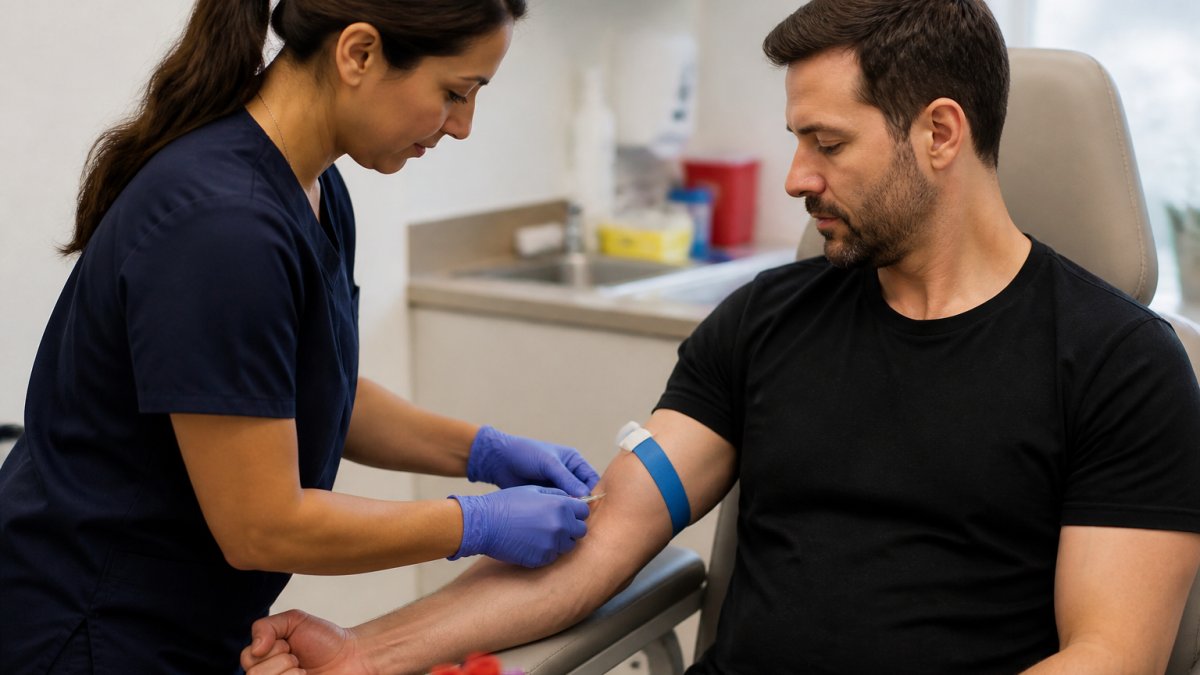
Arrive hydrated. Drink water for a few hours before your appointment (but not so much that you’re uncomfortable). Hydration plumps your veins, making them easier to access.
Wear loose, short sleeves. This makes it easier for the phlebotomist to access your arm. Tight sleeves that get rolled up can restrict blood flow.
Keep warm. Cold temperatures constrict blood vessels. If your clinic is cold, ask for a warm blanket on your arm before the draw. Some people find a warm shower or warm water on their arm helps veins become more prominent.
Sit or lie down for the draw. Don’t stand. This reduces the risk of dizziness or fainting.
Tell the phlebotomist if you’re a hard stick. If you know your veins are difficult to find, say so upfront. They may use an ultrasound or apply heat to help.
After the draw, keep pressure on the site for a few minutes. A bandage will be applied. Leave it on for at least a few hours. Some people bruise easily, if that’s you, ice the area for the first 24 hours.
You can eat and drink normally after your test. Your fasting period is over. Eat something with protein and carbs to stabilize your blood sugar.
Results typically arrive within 1-3 business days, depending on your lab and test type. Some at-home kits provide results within a week.
Common Mistakes That Skew Testosterone Results
Men often make preventable errors that compromise test accuracy. Here are the most common ones we see.
Testing at different times of day. If your first test was at 8 a.m. and your follow-up is at 2 p.m., you’re comparing apples to oranges. Stick to the same time window.
Not disclosing medications. Some drugs lower testosterone. Your doctor needs to know what you’re taking to interpret results correctly. Don’t assume something is irrelevant.
Exercising hard the day before. A brutal workout temporarily suppresses testosterone. If you’re trying to establish a baseline, keep activity moderate for 24 hours before testing.
Drinking alcohol the night before. Even moderate drinking can lower readings. If you had drinks the night before your test, mention it to your clinician.
Not fasting long enough. Eight hours is the standard. Fasting for only four or five hours leaves metabolic markers elevated, which can skew results.
Retesting too soon. If you’re monitoring TRT, your doctor will recommend when to retest, usually 6-8 weeks after a dose change. Testing after two weeks won’t show meaningful change and wastes money.
Ignoring stress and sleep. Chronic stress and poor sleep genuinely lower testosterone. If you test during a stressful week or after sleeping poorly, your results won’t reflect your true baseline. Reschedule if possible.
Do NOT take a testosterone dose the morning of your test unless your doctor explicitly tells you to. For most monitoring tests, you’ll skip that morning dose so the lab can see how your body is doing at trough (the lowest point in your cycle).
What Happens After Your Testosterone Blood Test
Once your blood is drawn, the lab processes your sample. Turnaround time is usually 1-3 business days for standard testosterone panels. Some specialized tests take longer.
Your results will show your testosterone level, the reference range for your lab, and sometimes a flag if your result is outside the normal range. Don’t panic if you see a flag, it just means your number is higher or lower than average.
When you get your results, schedule a consultation with your physician to review them. This is where the real work happens. A number on a page means nothing without context.
If testosterone is low and you have symptoms, your doctor might recommend testosterone replacement therapy (TRT). If testosterone is normal but you still feel terrible, there might be another cause, thyroid dysfunction, sleep apnea, depression, or something else entirely.
At Socal Mens Clinic Virtual, we use a lab-first approach. We order comprehensive testing upfront so we understand your full hormonal picture. We don’t just look at testosterone, we also check thyroid, estrogen, prolactin, and metabolic markers.
If you start treatment, you’ll need follow-up tests to monitor how your body responds. Most clinicians retest 6-8 weeks after starting or changing a dose. After that, annual or biannual testing is typical for maintenance.
Preparing for testosterone blood work isn’t complicated, but the details matter. An eight-hour fast, morning timing, and avoiding the common pitfalls we’ve outlined will get you accurate results. The better your test, the better your doctor can help you.
If you’re ready to get tested and explore whether testosterone therapy might help you feel better, Socal Mens Clinic Virtual offers lab-based assessment with licensed California physicians.
Frequently Asked Questions
Do I need to fast before a testosterone blood test?
Fasting requirements depend on what your clinician is testing. If your testosterone blood work includes a lipid panel or glucose screening, an 8-12 hour fast is typically recommended. For testosterone levels alone, fasting is less critical, but your lab order will specify. Always follow the instructions on your lab requisition to ensure accurate results. When in doubt, contact your provider to confirm whether fasting applies to your specific testosterone blood work panel.
Can medications or supplements affect my testosterone blood test results?
Yes. Certain medications, supplements, and even sleep disruption can temporarily lower testosterone levels. Discuss all medications and supplements with your provider before testing, do not stop taking prescribed medications without guidance. Some over-the-counter supplements, energy drinks, and herbal products may influence results. Inadequate sleep the night before testing can also depress levels. Provide your clinician with a complete list of what you’re taking so they can interpret your results accurately and determine whether retesting is needed.
How long does it take to receive testosterone blood test results?
Most labs return testosterone blood work results within 24-48 hours. At Socal Mens Clinic Virtual, results are reviewed by your licensed California physician, who will discuss findings and next steps during your follow-up consultation. If your initial test shows low testosterone, your provider may recommend a confirmatory test or additional hormone panel testing before discussing treatment options. Turnaround time allows your clinician to develop a personalized plan based on your complete lab profile and symptoms.