
Table of Contents
- Why Strength Training With TRT Works Better Than Either Alone
- Who Benefits From Combining Strength Training With Testosterone Replacement Therapy
- A Practical TRT Workout Plan for Men Starting Treatment
- Resistance Training on TRT: Frequency, Volume, and Intensity
- TRT Recovery and Exercise: Sleep, Nutrition, and Training Adaptation
- Risks and Warning Signs to Watch During Training
- Tracking Progress Beyond the Scale
- Frequently Asked Questions
Last Updated: October 17, 2026
Why Strength Training With TRT Works Better Than Either Alone
Combining strength training with testosterone replacement therapy works better than either alone because testosterone improves recovery and protein synthesis while lifting provides the mechanical signal muscles need to grow. At Socal Mens Clinic Virtual, our lab-first approach starts with your actual hormone levels, then builds a plan around them.
Here is the core idea: testosterone is the raw material, but training is the instruction manual. Without resistance training, higher testosterone levels have little muscle to act on. Without adequate testosterone, hard training produces slower recovery and weaker adaptation.
How Testosterone Supports Muscle Protein Synthesis
Testosterone is a hormone that helps the body build and repair muscle tissue after training stress. It supports muscle protein synthesis, the process where the body turns dietary protein into new muscle fibers.
Training creates the demand. Testosterone helps meet it. That combination drives training adaptation and better muscle repair between sessions.
What Research Shows About Testosterone Therapy and Muscle Growth
Clinical studies generally link testosterone therapy with modest increases in lean body mass and strength, especially when paired with resistance training. The gains are real but gradual. This is not a shortcut.
What most guides miss: the men who gain the most are usually the ones who train consistently and sleep well. Hormones amplify good habits. They do not replace them.
Testosterone therapy supports muscle growth best when training, protein intake, and sleep are already handled. The hormone is one input, not the whole system.
Who Benefits From Combining Strength Training With Testosterone Replacement Therapy
Men who benefit most from strength training with TRT are those with confirmed low testosterone on lab testing, symptoms like fatigue or muscle loss, and no medical reason to avoid either treatment or exercise. Eligibility should come from a clinician, not a questionnaire.
Signs worth testing for include:
- Persistent fatigue and brain fog
- Declining strength despite regular exercise
- Slow training recovery and lingering soreness
- Loss of muscle mass with stable habits
- Low libido or mood changes
Men over 40 with these symptoms are common candidates. A lab-first approach using baseline hormone levels separates real deficiency from normal aging. The Endocrine Society clinical practice guideline on testosterone therapy outlines how diagnosis and monitoring should work.
Starting testosterone without baseline labs means you never know where you started. That makes it impossible to judge whether treatment is working or whether your dose needs adjusting.
A Practical TRT Workout Plan for Men Starting Treatment
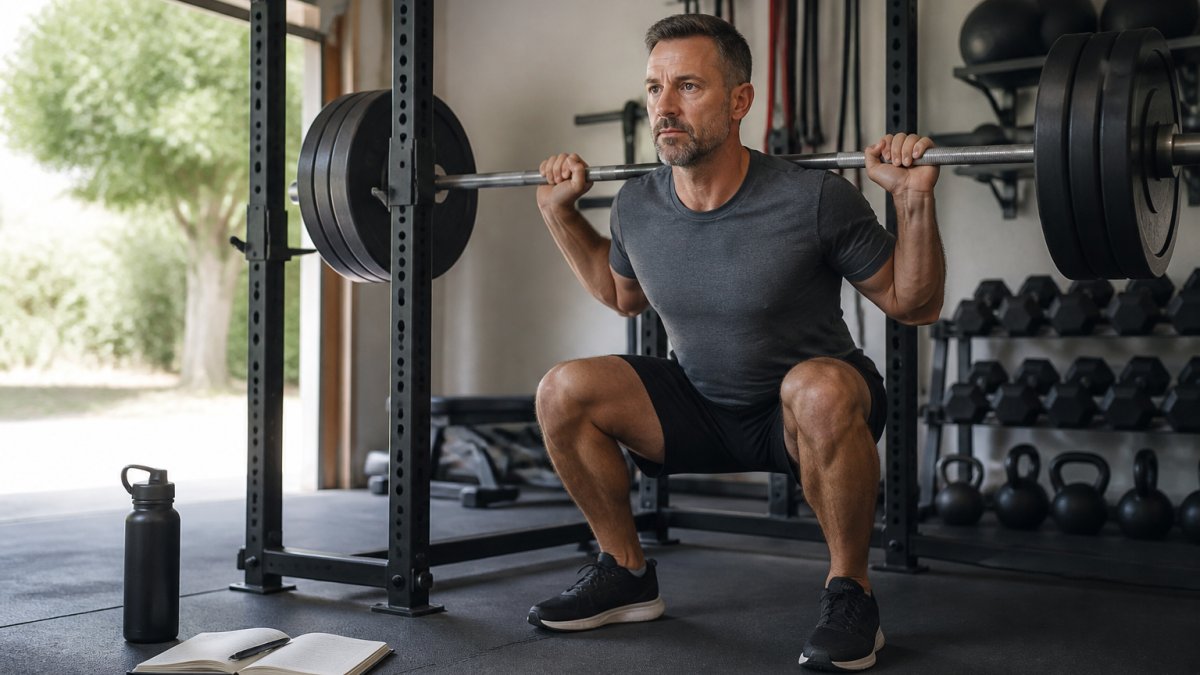
A practical TRT workout plan starts with two or three full-body resistance training sessions per week, then adds load slowly. The goal in month one is showing up, not maxing out. What follows is a usable template, exercise selection, weekly frequency, progression, and deload guidance, that most benefit-focused guides leave out.
Weeks 1-4: Building the Habit
Train two or three nonconsecutive days per week. Use full-body sessions built around one push, one pull, and one leg movement, plus a hinge and a carry. Keep effort moderate, stop most sets with two or three reps in reserve. Log every exercise session with weight, reps, and a simple effort rating.
A sample week:
- Day A: goblet squat, dumbbell bench press, seated cable row, Romanian deadlift, farmer carry
- Day B: leg press, overhead press, lat pulldown, hip thrust, plank
- Day C (optional): trap-bar deadlift, incline dumbbell press, chest-supported row, split squat, suitcase carry
Sets and reps: 2-3 working sets of 8-12 reps per movement. Rest 90-120 seconds on compound lifts. Warm up with five minutes of easy cardio and one or two lighter ramp-up sets on the first big lift.
Weeks 5-12: Progressive Overload
Add weight or reps each week. A simple rule: when you hit the top of the rep range on all sets with two reps still in reserve, add the smallest available increment next session, commonly 2.5-5 lb on upper-body lifts and 5-10 lb on lower-body lifts. Aim for training consistency over intensity. This is where most strength gains and early muscle size changes appear. Optimizing your physiological foundation through targeted supplements for strength remains a secondary priority compared to the steady accumulation of mechanical tension over time.
Keep the same movement patterns for the full block so you can measure progress. Swap exercises only if a movement causes joint pain or you lack the equipment.
Weeks 13 and Beyond: Periodization
Rotate harder and lighter blocks. Plan a lighter week every fourth or fifth week: keep the same exercises but cut working sets by about 40% and keep effort at three or four reps in reserve. Periodization keeps progress steady and reduces joint strain.
A common pattern is three hard weeks followed by one lighter week, then repeat with slightly heavier starting loads. If sleep, stress, or joint soreness worsens for more than a week, take the lighter week early rather than pushing through.
| Phase | Frequency | Focus | Expected Outcome |
|---|---|---|---|
| Weeks 1-4 | 2-3 sessions/week | Habit and form | Consistent routine |
| Weeks 5-12 | 3 sessions/week | Progressive overload | Early strength gains |
| Week 13+ | 3-4 sessions/week | Periodization | Steady long-term progress |
If a lift stalls for three sessions in a row, do not add load. Repeat the same weight, tighten form, and check sleep and protein before changing the program.
Resistance Training on TRT: Frequency, Volume, and Intensity
Resistance training on TRT works best at three sessions per week, eight to twelve hard sets per muscle group, and moderate-to-heavy loads. More is not automatically better.
Practical targets:
- Frequency: 3 sessions weekly, hitting each muscle twice
- Volume: 8-12 working sets per muscle group weekly
- Intensity: leave one or two reps in reserve most sets
- Progression: small weekly increases in weight or reps
Weight training on TRT is not license to train to failure daily. Recovery capacity improves, but tendons and joints adapt slower than muscle.
Track your working weights in a log. If your top set on a main lift has not moved in three weeks, your recovery, sleep, or protein intake is the likely bottleneck, not your dose.
TRT Recovery and Exercise: Sleep, Nutrition, and Training Adaptation
TRT recovery and exercise outcomes depend heavily on sleep and protein. Aim for seven to nine hours of sleep and roughly 1.6 grams of protein per kilogram of body weight daily, a range supported by position stand from the International Society of Sports Nutrition.
Recovery targets that matter:
- Sleep: 7-9 hours, consistent schedule
- Protein: spread across three to four meals
- Hydration: steady through the day
- Rest days: at least two per week
Muscle fibres repair during rest, not during the set. Skimping on sleep undercuts the long-term benefits of both training and treatment.
Risks and Warning Signs to Watch During Training
Risks during training on TRT include joint strain from jumping load too fast, blood pressure changes, and elevated red blood cell counts. Monitoring catches these early.
Watch for:
- Sharp joint or tendon pain that persists
- Unusual shortness of breath or chest discomfort
- Swelling in the ankles or hands
- Mood swings or acne flare-ups
- Persistent fatigue that worsens with training
Follow-up monitoring matters. Periodic labs let your clinician check testosterone levels and red blood cell counts and adjust the plan. The FDA information on testosterone products notes that these medicines require monitoring and are for diagnosed deficiency, not general use.
Do not stack extra testosterone or other anabolic steroids on top of a prescribed dose to speed progress. Medical TRT and bodybuilding-style steroid protocols are different things with different risk profiles.
Tracking Progress Beyond the Scale
Track progress with strength numbers, waist measurements, photos, and how clothes fit, not just body weight. Body composition shifts can hide on a scale, and a single number rarely tells you whether training and treatment are working.
A simple monthly check:
- Top set weight on three main lifts
- Waist measurement at the navel
- Monthly photo, same lighting
- Energy and sleep rating, 1-10
- Recovery between sessions
Add two clinical measures your clinician can order: a morning total and free testosterone level drawn at a consistent time relative to your dose, and a complete blood count to watch hematocrit. Keep those results in the same log as your training numbers so patterns are visible side by side.
Expect realistic timelines. Early strength gains often show in the first two to three months. Visible muscle mass changes usually take longer, commonly three to six months of consistent training and adequate protein, and individual variation is large. Outcomes depend on baseline hormone status, training history, adherence, sleep, and other health factors, so compare yourself to your own prior month, not to someone else’s before-and-after photo.
Use the log to make decisions:
- Strength up, waist steady or down: keep the plan and progress load as scheduled.
- Strength flat for three weeks: check sleep, protein, and session attendance before changing the program.
- Waist rising faster than strength: review energy intake and portion sizes with your clinician.
- Fatigue or soreness worsening across weeks: take a lighter week and mention it at your next follow-up.
A useful progress review combines training numbers, body measurements, symptoms, and periodic labs. No single metric decides whether the plan is working.
Frequently Asked Questions
Can you strength train while on testosterone replacement therapy?
Yes. Strength training is generally safe and encouraged for men on TRT, provided a physician has cleared you for exercise. TRT can improve energy and recovery, which may make training more productive, but it does not replace the need for proper form, progressive loading, and rest. Start with a program matched to your current fitness level and increase volume gradually. If you have cardiovascular, prostate, or other health concerns, discuss your training plans with your prescribing doctor before starting.
How long does it take to notice strength changes on TRT?
Timelines vary widely by individual, baseline testosterone levels, training history, and consistency. Some men report improved energy and recovery within the first few weeks, while measurable strength gains often take 8-12 weeks of consistent resistance training. Visible muscle mass changes typically take longer, often 3-6 months. Your age, nutrition, sleep, and how closely you follow your program all affect the pace. Track performance metrics like weights lifted and reps completed rather than relying on the scale alone.
Should you change your workout when starting testosterone therapy?
You do not need to overhaul your routine, but adjusting volume and recovery is wise. Begin with 2-3 full-body sessions per week, focusing on compound movements and gradual progression. As recovery improves, you can add frequency or volume. Avoid jumping into advanced bodybuilding splits immediately. A structured TRT workout plan that emphasizes consistency and progressive overload will serve you better than a sudden increase in training intensity.
What should you monitor when combining TRT and strength training?
Monitor both clinical and performance markers. Your physician will check testosterone levels, hematocrit, prostate-specific antigen, and other labs at scheduled intervals. On the training side, track strength gains, recovery quality, sleep, joint pain, and any unusual fatigue or mood changes. Report persistent symptoms to your doctor. Keeping a simple training log and sharing it at follow-up visits helps your care team adjust your treatment and exercise plan appropriately.