
Table of Contents
- What Is Medical Oversight in Testosterone Replacement Therapy
- TRT Blood Tests Before Treatment: The Foundation of Your Plan
- Clinical Assessment and Medical History Review
- How Personalized Dosing and Treatment Plans Are Built
- TRT Follow-Up Appointments: Ongoing Monitoring and Adjustments
- TRT Safety and Side Effects: What Clinicians Monitor Beyond Testosterone Levels
- Choosing a TRT Provider: Evaluating Medical Oversight Quality
- Understanding Medical Oversight Protects Your Health
- Frequently Asked Questions
Last Updated: October 19, 2026
What Is Medical Oversight in Testosterone Replacement Therapy
Medical oversight in TRT is the ongoing clinical supervision and monitoring that keeps your treatment safe, effective, and tailored to your needs. It’s not a one-time prescription but a continuous partnership with your clinician to track how your body responds, adjust dosing, and catch complications early. (Source: guidelines from the Endocrine Society)
At Socal Mens Clinic Virtual, medical oversight is the foundation of every treatment plan. Without it, you’re guessing whether your levels are optimal or side effects are developing silently. The process includes initial blood work, follow-up testing, symptom assessment, and dose adjustments based on real data.
The best TRT outcomes happen when clinicians monitor beyond just testosterone levels. Blood pressure, hematocrit, prostate markers, and mood changes all matter. This comprehensive approach catches problems before they become serious.
Here’s what proper medical oversight protects:
- Your cardiovascular health and blood pressure stability
- Red blood cell production and oxygen transport
- Prostate function and urinary health
TRT Blood Tests Before Treatment: The Foundation of Your Plan
Initial Baseline Labs and What They Measure
Before any testosterone is prescribed, you need a complete laboratory picture. Baseline labs establish where you’re starting and identify underlying conditions that might affect treatment safety.
Your baseline labs typically include:
- Total testosterone and free testosterone levels
- Luteinizing hormone (LH) and follicle-stimulating hormone (FSH)
- Prostate-specific antigen (PSA)
These tests do more than confirm low testosterone.
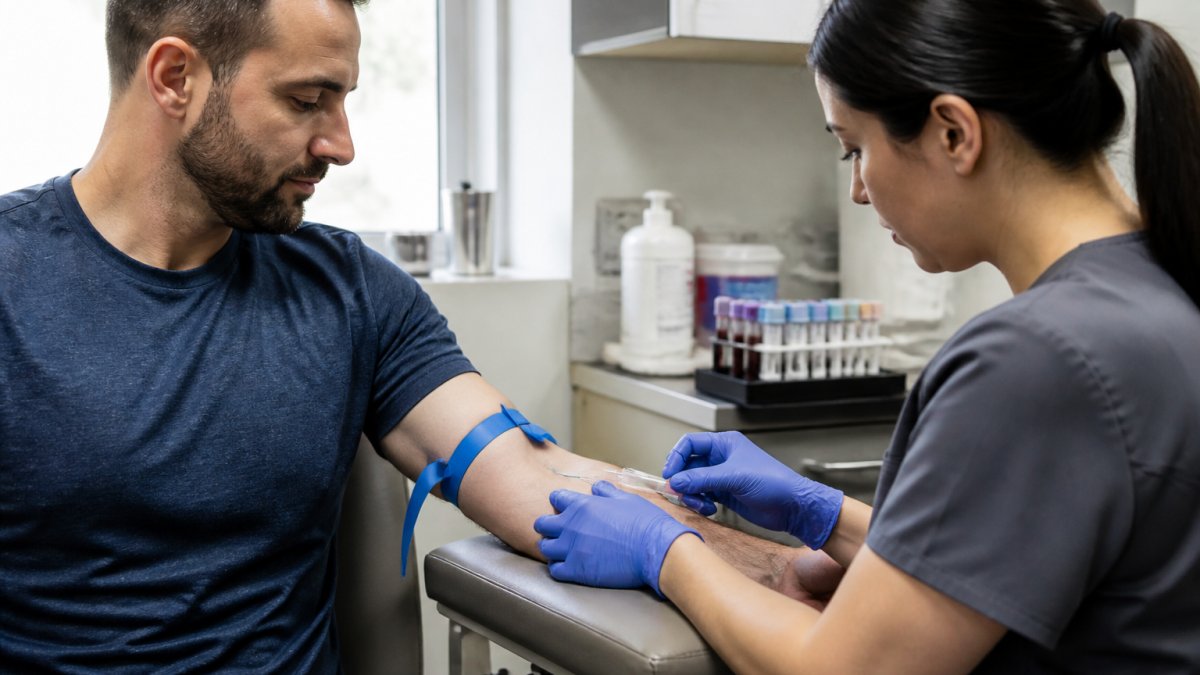
Never skip baseline labs. Some online clinics cut corners here. Without baseline data, your clinician can’t detect whether side effects are emerging or whether your dose is appropriate. You’re flying blind.
Morning Blood Draws and Repeat Testing
Testosterone levels are highest in the early morning and decline through the day, which is why morning blood draws matter for accuracy.
A draw between 6 and 9 AM captures testosterone at its peak, giving your clinician a consistent measurement. A 3 PM test reads artificially low and might trigger unnecessary dose increases.
Repeat testing happens at regular intervals:
- 4-6 weeks after starting treatment (to check initial response)
- 8-12 weeks after dose changes (to assess stability)
- Annually once stable (to monitor long-term safety)
Each test measures not just testosterone but also the markers that indicate whether side effects are developing.
Clinical Assessment and Medical History Review
Your medical history is the roadmap your clinician uses to personalize care.
This assessment covers:
- Previous testosterone levels and any prior TRT attempts
- Cardiovascular history (heart disease, stroke, blood clots)
- Prostate or urinary symptoms
A quality assessment isn’t a checkbox exercise. Your clinician should ask follow-up questions, listen to your concerns, and explain how your history shapes your plan.
How Personalized Dosing and Treatment Plans Are Built
Personalized dosing starts with data, not guesswork. Your baseline labs, clinical history, and symptoms determine your starting dose and method.
Here’s how the process works:
- Analyze baseline testosterone level, Your starting dose depends on how low you are and how quickly you need results
- Review clinical contraindications, Certain conditions require lower starting doses or closer monitoring
- Assess symptom severity, More severe fatigue or sexual dysfunction might justify a higher starting dose
- Choose delivery method, Injections, gels, or pellets affect dosing strategy differently
- Set monitoring schedule, Your clinician determines how often you need follow-up labs based on your risk profile
A personalized plan isn’t one-size-fits-all: a 45-year-old with mild low testosterone and no health issues gets a different plan than a 55-year-old with cardiovascular risk factors and severe symptoms.
The goal of personalized dosing is the lowest effective dose that resolves your symptoms while minimizing side effect risk. More testosterone isn’t always better. The sweet spot is individual to you.
TRT Follow-Up Appointments: Ongoing Monitoring and Adjustments
Periodic Bloodwork and Treatment Response Assessment
Follow-up appointments aren’t optional check-ins. They’re the mechanism that keeps treatment safe and effective.
Your follow-up schedule typically looks like this:
- Week 4-6: First labs after starting treatment to check initial response
- Week 8-12: Second labs to assess stability after any dose adjustments
- Month 6: Comprehensive labs including cardiovascular and prostate markers
At each follow-up, your clinician reviews:
- Your testosterone and free testosterone levels
- Whether you’re in the target range (typically 400-1000 ng/dL for total testosterone)
- Symptom improvement (energy, mood, sexual function, muscle recovery)
This data tells your clinician whether your current dose is working or whether adjustment is needed.
Dose Adjustments Based on Symptom Improvement
Dose adjustments happen when labs and symptoms don’t align with your goals. If your testosterone is in range but you’re still fatigued, your dose may be too low for you personally; if labs are high and side effects appear, it’s too high.
Common reasons for dose adjustments:
| Situation | Adjustment | Reason |
|---|---|---|
| Testosterone in range but symptoms persist | Increase dose gradually | Your body may need higher levels for symptom relief |
| Labs elevated but side effects appear | Decrease dose | Reduce excess testosterone and manage complications |
| Hematocrit rising | Decrease dose or donate blood | Prevent blood thickening and clot risk |
| PSA rising significantly | Reduce dose or pause treatment | Monitor prostate safety |
| Mood or sleep worsening | Adjust dose or change formulation | Find better individual tolerance |
Dose adjustments happen in small increments, never overnight, and are monitored with follow-up labs 4-8 weeks later.
TRT Safety and Side Effects: What Clinicians Monitor Beyond Testosterone Levels
Hematocrit, Red Blood Cell Count, and Cardiovascular Risk
Testosterone stimulates red blood cell production, so men on TRT need regular hematocrit monitoring. When hematocrit rises too high, blood thickens, increasing clot risk and cardiovascular strain (Hematocrit and risk of venous thromboembolism in a general population. The Tromsø study).
Normal hematocrit ranges are 41-53% for men. On TRT, clinicians watch for hematocrit creeping above 54%. When it does, your clinician might recommend:
- Dose reduction
- More frequent blood donations to lower red blood cell count
- Increased hydration and cardiovascular exercise
Blood pressure also needs monitoring, since some men experience elevations on testosterone. Your clinician checks it each visit and adjusts treatment if readings climb.
Prostate Health and Blood Pressure Monitoring
Testosterone affects prostate tissue, so men on TRT need PSA monitoring to catch abnormal growth early. Your baseline PSA is compared to follow-up levels, and a rapidly rising PSA signals a need to reassess treatment.
Blood pressure monitoring is straightforward but essential, since elevated readings increase cardiovascular risk, especially combined with testosterone therapy. Your clinician checks it at follow-ups and may recommend lifestyle changes or medication adjustments.
If your PSA rises more than 1 ng/mL per year or your blood pressure stays elevated despite lifestyle changes, your clinician should discuss whether to reduce your testosterone dose or pause treatment. These aren’t minor concerns, they’re safety signals.
How Abnormal Results Change Your Care Plan
Abnormal results trigger a conversation, not panic. Your clinician explains what the result means, what caused it, and what changes are needed.
Examples of how abnormal results reshape care:
- Elevated hematocrit: Reduce dose, increase hydration, consider blood donation
- Rising PSA: Lower dose, increase monitoring frequency, possibly pause treatment
- High blood pressure: Reduce dose, add antihypertensive medication, increase exercise
Abnormal results don’t mean stopping treatment immediately. They mean your clinician adjusts your plan to keep you safe while maintaining benefits.
Choosing a TRT Provider: Evaluating Medical Oversight Quality
Not all TRT providers offer the same oversight. Some prioritize speed and convenience over safety; others build personalized plans and monitor comprehensively.
When evaluating a TRT provider, ask:
- Do they require baseline labs before prescribing?
- How often do they schedule follow-up appointments?
- Do they monitor beyond just testosterone levels?
At Socal Mens Clinic Virtual, we use a lab-first approach. Every patient gets comprehensive baseline testing, regular follow-up monitoring, and personalized dose adjustments based on your data and symptoms. Our licensed California physicians review your complete picture, not just your testosterone number, before making treatment decisions.
What Shared Decision-Making and Informed Consent Look Like
Shared decision-making means your clinician explains your options and their risks and benefits, and listens to your preferences. You’re an active partner, not a passive recipient.
Informed consent means you understand:
- Why TRT is recommended for you
- What benefits you can realistically expect
- What side effects are possible
A clinician practicing true shared decision-making doesn’t pressure you. They present the evidence, answer questions honestly, and respect your choice.
Oversight Differences by Treatment Formulation
Different testosterone formulations require different monitoring approaches. Injections, gels, and pellets have different absorption patterns, peak levels, and side effect profiles.
Injectable testosterone (weekly or bi-weekly injections):
- Requires baseline and follow-up labs 4-6 weeks after starting
- Testosterone levels peak 24-48 hours after injection
- More stable long-term hormone levels with consistent dosing
Topical testosterone gel (applied daily to skin):
- Requires labs 4-6 weeks after starting to check absorption
- Testosterone levels rise gradually through the day
- Risk of transferring to others through skin contact
Testosterone pellets (implanted under skin, release over months):
- Require baseline labs before insertion
- Difficult to adjust dose if side effects emerge (pellets can’t be removed easily)
- Provide consistent hormone levels over 3-6 months
Your clinician chooses the formulation that best fits your lifestyle, preferences, and medical needs. The monitoring schedule adjusts based on which method you’re using.
Understanding Medical Oversight Protects Your Health
Medical oversight in TRT isn’t bureaucracy or unnecessary cost. It’s the framework that keeps treatment working safely and effectively over time.
Without proper oversight, you risk:
- Testosterone levels that are too high or too low for your needs
- Undetected side effects like blood clotting or prostate changes
- Missed opportunities to adjust your dose when your symptoms change
With comprehensive medical oversight, you get:
- Personalized dosing based on your labs and symptoms
- Early detection of any emerging complications
- Dose adjustments that keep you feeling your best
- Clear explanations of your progress and any concerns
The oversight process takes time and attention. But that investment pays off in better results, fewer complications, and genuine peace of mind that your treatment is being managed by someone who understands your individual needs.
Medical oversight isn’t one-size-fits-all, and your TRT experience depends on finding a provider who takes it seriously.
Frequently Asked Questions
What tests are typically used before starting TRT?
Before treatment begins, your clinician orders baseline laboratory work to measure testosterone levels, assess overall health, and identify any contraindications. Standard tests include a complete metabolic panel, lipid profile, hematocrit, prostate-specific antigen (PSA), and morning testosterone levels. Additional bloodwork may evaluate thyroid function, prolactin, or other hormones depending on your medical history. These baseline labs establish your starting point and help your provider design a personalized treatment plan tailored to your specific biology.
How often should someone on TRT have follow-up appointments?
Most clinicians schedule follow-up appointments at 6 weeks after starting treatment, then every 3 to 6 months during the first year. After stabilization, many patients transition to annual or semi-annual check-ins. Each visit includes symptom assessment, review of side effects, and often new bloodwork to measure testosterone levels, hematocrit, and other markers. The frequency depends on your treatment response, any side effects, and your provider’s protocols. Regular oversight ensures your dose remains appropriate and catches potential complications early.
What should a clinician monitor during testosterone therapy?
Beyond testosterone levels, clinicians monitor hematocrit and red blood cell count to detect polycythemia (elevated red blood cells), blood pressure to screen for cardiovascular changes, and prostate markers like PSA. They also assess symptom improvement (energy, libido, mood, muscle gain), screen for side effects such as acne or mood swings, and review liver and kidney function through periodic labs. A thorough oversight process includes discussion of fertility concerns if relevant and evaluation of how the treatment formulation (injections, gels, pellets) affects your individual response and compliance.
What happens if TRT isn’t working after a few months?
If you are not experiencing symptom improvement or if labs show that testosterone levels are not rising as expected, your clinician adjusts your treatment plan. Adjustments may include increasing your dose, changing the frequency of injections, switching to a different formulation, or addressing underlying issues (poor compliance, absorption problems, or concurrent health conditions). Your provider may also investigate whether low testosterone was truly the cause of your symptoms or whether other factors need attention. Ongoing medical oversight ensures the treatment evolves based on your individual response.