
Table of Contents
- How Diet Affects Testosterone Production
- Foods That Boost Testosterone
- Foods and Substances That Lower Testosterone
- The Impact of Weight Loss on Testosterone Levels
- Building a Testosterone-Supporting Meal Plan
- How to Get a Testosterone Blood Test
- Common Mistakes to Avoid
- Frequently Asked Questions
Last Updated: September 30, 2026
How Diet Affects Testosterone Production
A diet low testosterone can be reversed by providing the raw materials your body needs to produce and regulate this hormone. (Source: the National Institutes of Health’s Office of Dietary Supplements)
Testosterone production requires adequate protein, healthy fats for cell membranes, and minerals like zinc and magnesium that act as cofactors in hormone synthesis.
Many men discover that a diet low testosterone improves energy, focus, and mood when dietary changes are made. At Socal Mens Clinic Virtual, our licensed California physicians utilize a lab-first approach to create personalized treatment plans based on your unique biological data, revealing whether medical intervention is necessary.
Diet is foundational for hormonal health and where you start before considering other interventions.
Track your baseline energy and mood for one week before making dietary changes. You’ll notice the difference more clearly when you compare before and after.
Foods That Boost Testosterone
Certain foods contain nutrients that directly support testosterone synthesis. These aren’t magic bullets, but they’re the building blocks your body needs.
Fatty Fish and Omega-3 Fatty Acids
Fatty fish like salmon, mackerel, and sardines deliver omega-3 fatty acids that reduce inflammation and improve blood flow, both critical for testosterone production.
Aim for two to three servings of fatty fish per week (3-4 ounces each), baked or grilled with olive oil and lemon.
Omega-3 fatty acids improve blood flow and reduce inflammation, both essential for maintaining healthy testosterone levels and sexual function.
Zinc-Rich Foods
Zinc is a mineral your body cannot store and requires steady dietary supply. Low zinc correlates with lower testosterone levels. Six oysters provide nearly a full day’s requirement.
Other excellent sources include:
- Beef and lamb
- Pumpkin seeds
- Chickpeas and legumes
- Cashews and almonds
- Eggs
Include at least one zinc-rich food at each meal: pumpkin seeds at breakfast, lean beef at lunch, cashews as a snack.
Vitamin D Sources
Your body manufactures vitamin D from sunlight, but many men don’t get enough sun. Dietary vitamin D helps fill the gap.
Fatty fish is your best source; egg yolks and mushrooms also contribute. For most men, 15-30 minutes of midday sun exposure several times per week supports adequate vitamin D production.
If you live in a northern climate or work indoors, a vitamin D supplement (2,000-4,000 IU daily) may help; a blood test confirms deficiency.
Foods and Substances That Lower Testosterone
Certain dietary choices actively suppress testosterone by interfering with hormone synthesis, increasing estrogen conversion, or damaging hormone-producing organs.
Alcohol and Testosterone Suppression
Alcohol is one of the most potent dietary testosterone suppressors. Your liver prioritizes alcohol metabolism, diverting NAD+ (a critical coenzyme) away from testosterone synthesis. A single drink temporarily reduces testosterone; chronic drinking causes sustained suppression.
Men who consume more than two drinks per day have testosterone levels 20-25% lower than moderate drinkers. Three or more drinks in an evening suppress testosterone for 16-24 hours.
Alcohol increases cortisol, which suppresses testosterone production and damages the hypothalamic-pituitary-gonadal axis over time.
Alcohol impairs estrogen metabolism, leading to estrogen dominance in heavy drinkers, less testosterone production and more conversion of remaining testosterone to estrogen.
Practical limit: Keep alcohol to one drink per day or fewer, with at least two alcohol-free days per week. If struggling with low testosterone, eliminate alcohol for 8-12 weeks to assess impact.
Processed Sugars and Refined Carbohydrates
Processed sugars spike insulin, which suppresses testosterone through multiple pathways: direct enzyme inhibition, increased aromatase activity (converting testosterone to estrogen), chronic inflammation that impairs Leydig cells, and weight gain that increases aromatase.
A 75-gram serving of refined carbohydrates can elevate insulin by 200-300% and suppress testosterone within 30 minutes.
Practical limit: Eliminate added sugars and refined grains (soda, candy, pastries, white bread). Replace with whole grains, legumes, and vegetables. For sweetness, use small amounts of honey or maple syrup, or eat whole fruits with fiber.
Seed Oils and Omega-6 Imbalance
Seed oils high in omega-6 (sunflower, soybean, corn, canola) promote inflammation when consumed in excess relative to omega-3. Modern diets have omega-6 to omega-3 ratios of 15:1 to 20:1 (versus ancestral 1:1 to 4:1), driving chronic inflammation that impairs testosterone production and increases aromatase.
Seed oils appear in nearly all processed foods. A single fast-food meal can deliver 20-30 grams.
Practical limit: Cook with olive oil, avocado oil, or ghee. When eating out, request olive oil or dressings on the side. Reduce seed oils to less than 10% of total fat intake.
Excess Body Fat and Aromatase
Excess body fat is an endocrine problem. Fat cells produce aromatase, which converts testosterone to estrogen. This creates a vicious cycle: low testosterone promotes weight gain, weight gain increases aromatase, which further lowers testosterone. Breaking this cycle requires addressing diet and weight simultaneously.
Practical action: Lose 5-10% of body weight through dietary changes. A 220-pound man losing 11-22 pounds typically sees testosterone improvements within 8-12 weeks.
Phytoestrogens and Plant-Based Estrogens
Plant compounds (phytoestrogens) like genistein and daidzein in soy products weakly mimic estrogen. Whole soy foods are fine, but isolated soy protein powders are more concentrated and may suppress testosterone if consumed in large amounts (more than 100 grams per day).
Practical limit: Whole soy foods in moderation are fine. Avoid soy protein isolate powders; choose pea, hemp, or rice protein instead. (Source: the National Institutes of Health’s Office of Dietary Supplements)
The combination of alcohol, processed sugar, and seed oils creates a perfect storm for testosterone suppression. If you’re consuming all three regularly, eliminating them can produce noticeable improvements in energy, mood, and libido within 4-6 weeks.
The Impact of Weight Loss on Testosterone Levels
Weight loss is one of the most powerful dietary interventions for testosterone. Men who lose 5-10% of body weight experience measurable improvements within 8-12 weeks. Less fat tissue means less aromatase enzyme and less conversion of testosterone to estrogen; weight loss also improves insulin sensitivity.
Focus on a modest caloric deficit of 300-500 calories below maintenance, combined with resistance training to preserve muscle. Eliminating processed foods and added sugars often creates the deficit needed.
Building a Testosterone-Supporting Meal Plan
A testosterone-supporting diet is built on simple principles: whole foods, adequate protein, healthy fats, and nutrient-dense vegetables.
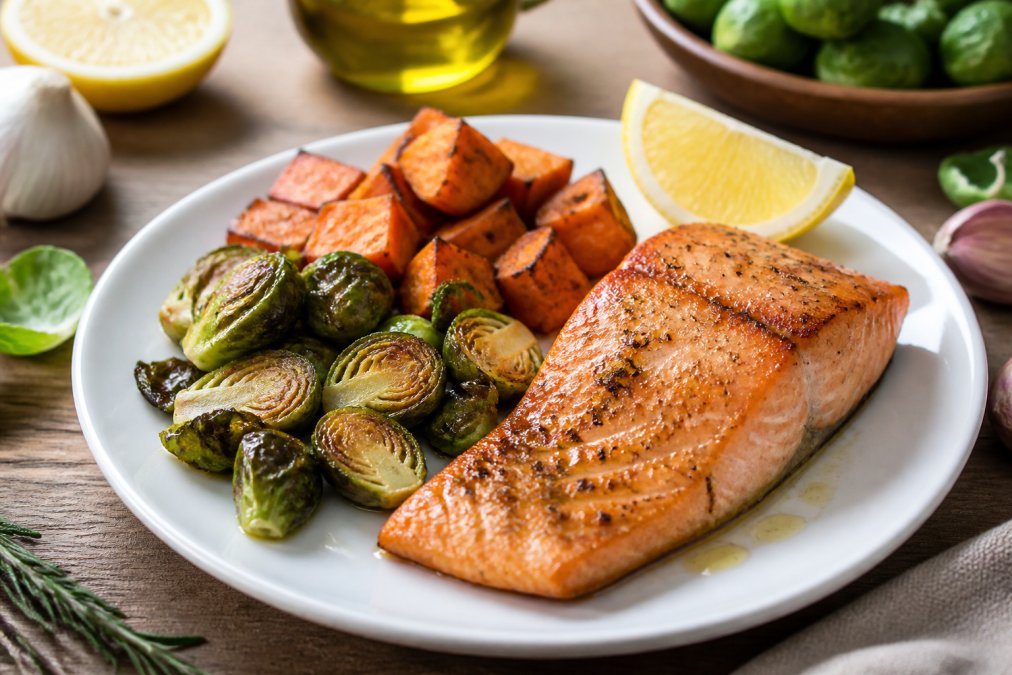
Sample Daily Menu (2,200-2,400 Calories)
Breakfast: Three eggs scrambled in olive oil with oatmeal, pumpkin seeds, and berries.
Mid-morning snack: Almonds and an apple.
Lunch: 4-ounce grilled salmon with roasted broccoli and brown rice.
Afternoon snack: Greek yogurt with walnuts.
Dinner: 4-ounce lean beef with sweet potato and salad.
This menu delivers approximately 100-120g protein, 60-70g fat, and 250-300g carbohydrates, with zinc, vitamin D, and magnesium from whole foods.
Practical Substitutions and Flexibility
Not every meal works for every person. Here’s how to adapt without losing nutritional balance:
Protein swaps: Substitute chicken breast, ground beef, eggs, lentils, or Greek yogurt based on preference.
Vegetable swaps: Broccoli, Brussels sprouts, spinach, kale, and bell peppers deliver similar micronutrients. Rotate based on season and cost; frozen vegetables retain nutrients.
Carbohydrate swaps: Brown rice, sweet potato, oats, and quinoa are interchangeable.
Meal Prep Strategy for Consistency
Prepare meals in batches: cook 1.5 pounds of protein, 3-4 cups of vegetables, and 2 cups of grains on Sunday. Store in glass containers and assemble meals throughout the week. This removes decision fatigue and ensures consistent nutrition.
Tracking Nutrients for Hormonal Balance
Track your intake for one week to identify nutritional gaps. If low in zinc, add beef or seeds; if low in magnesium, add leafy greens and nuts. Track one week per month to maintain awareness without obsession.
| Nutrient | Daily Target | Food Sources |
|---|---|---|
| Protein | 0.8-1g per lb body weight | Fish, beef, eggs, legumes |
| Zinc | 11mg | Oysters, beef, pumpkin seeds, chickpeas |
| Magnesium | 400-420mg | Spinach, almonds, pumpkin seeds, black beans |
| Vitamin D | 1,000-2,000 IU | Fatty fish, egg yolks, sunlight exposure |
| Omega-3 (EPA/DHA) | 1-2g | Salmon, sardines, mackerel, supplements |
Caloric Adjustment for Weight Loss
If your goal is to lose weight and restore testosterone, aim for a modest deficit of 300-500 calories below your maintenance level. For a 200-pound man with moderate activity, maintenance is roughly 2,600-2,800 calories. A target of 2,200-2,300 calories allows steady fat loss (about 0.5-1 pound per week) while preserving muscle.
Consistency beats perfection. A repeatable meal structure, protein + vegetable + grain at lunch and dinner, protein + fat at breakfast and snacks, is easier to sustain than constantly varying meals. Meal prep removes friction and ensures you hit your nutritional targets week after week.
How to Get a Testosterone Blood Test
Dietary changes take time to show results. A blood test tells you your baseline and tracks progress objectively.
A blood test is the only way to know your actual testosterone level. Symptoms alone, fatigue, low libido, difficulty building muscle, could indicate low testosterone or other hormonal imbalances.
Common Mistakes to Avoid
Men pursuing testosterone optimization through diet often stumble on predictable errors.
Frequently Asked Questions
What foods will raise testosterone most effectively?
Fatty fish like salmon and mackerel provide omega-3 fatty acids and vitamin D, both critical for hormone production. Oysters and beef contain zinc, essential for testosterone synthesis. Eggs, almonds, and pumpkin seeds deliver magnesium and selenium. The Mediterranean diet pattern combining these foods has shown the strongest evidence for supporting healthy testosterone levels through nutrient density rather than isolated ‘superfoods.’
Can diet alone fix low testosterone symptoms?
Diet is one piece of hormonal health, but low testosterone often requires professional evaluation. A lab-first approach identifies whether your levels are genuinely low, many men assume they are based on fatigue or weight gain alone. Once tested, a physician can determine if dietary changes alone are sufficient or if additional treatment is needed alongside nutritional support.
How do I know if I need a testosterone blood test?
Persistent fatigue, weight gain despite exercise, reduced muscle mass, low libido, or brain fog lasting weeks warrant testing. Your primary care doctor can order a serum testosterone test. Testing requires a simple blood draw and baseline measurement to establish your individual levels.
What drinks or substances should I avoid if I have low testosterone?
Alcohol, especially excessive consumption, lowers testosterone and raises cortisol. High-sugar beverages spike insulin, which interferes with hormone balance. Processed foods with seed oils and refined carbohydrates promote insulin resistance, harming testosterone bioavailability. Focus on water, unsweetened tea, and black coffee while eliminating sugary drinks and limiting alcohol to occasional use.