
Table of Contents
- What Makes a TRT Clinic With Personalized Plans Different
- TRT Blood Work Requirements: The Foundation of Personalized Treatment
- How Personalized TRT Plans Actually Work
- Top TRT Clinics Offering Personalized Plans
- Socal Mens Clinic Virtual: Lab-First Approach With Ongoing Physician Support
- Defy Medical: Maximum Customization Across Delivery Methods
- Hone Health: Comprehensive Biomarker Testing for Precision Dosing
- Fountain: Hyper-Personalized Plans With 24/7 Support
- Peter MD: Affordable Personalization With Extensive Lab Analysis
- Marek Health: Premium Biomarker-Driven Optimization With Coaching
- How Much Does Personalized TRT Cost
- TRT Clinic Follow-Up Schedule: Why Ongoing Monitoring Matters
- Personalized vs. Cookie-Cutter TRT Protocols
- Conclusion
Last Updated: August 20, 2026
What Makes a TRT Clinic With Personalized Plans Different
Most online TRT clinics operate on a one-size-fits-most model: basic bloodwork, predetermined dosing tier, done. A TRT clinic with personalized plans builds your protocol around your individual hormone levels, metabolism, symptoms, and goals, the difference between treatment that works and treatment that feels like guessing.
At Socal Mens Clinic Virtual, the lab-first approach means your treatment emerges from your data, not a predetermined menu. Your serum testosterone, free testosterone, estradiol, SHBG, and metabolic markers inform your dosing protocol, with adjustments based on ongoing monitoring. Two men with identical testosterone readings respond differently to identical doses. Without personalization, you’re either under-treated or over-treated, wasting months on ineffective doses before restarting the adjustment process. Personalized plans compress that timeline because they’re built on your specific needs from day one.
TRT Blood Work Requirements: The Foundation of Personalized Treatment
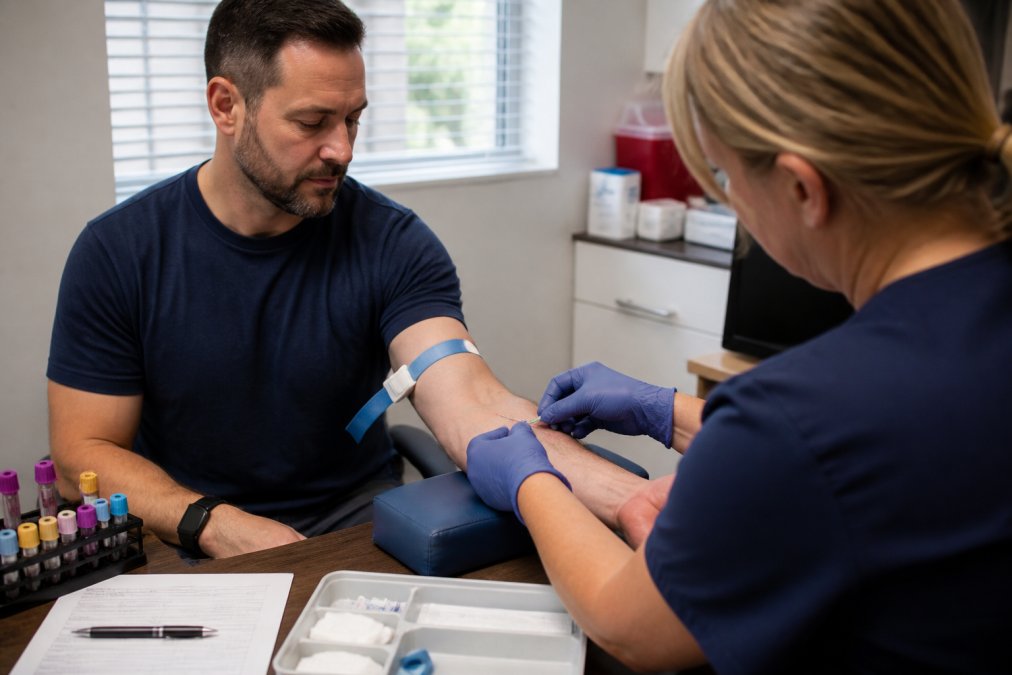
Comprehensive lab testing is the diagnostic bedrock separating actual personalization from guesswork. A baseline hormone panel typically includes serum testosterone, free testosterone, estradiol, SHBG, prolactin, and thyroid markers (TSH, free T3, free T4). A personalized TRT clinic also assesses metabolic health through glucose, insulin, lipid panels, and liver function tests.
Most clinics cut corners by running a basic panel and starting a standard dose. A personalized approach uses that initial panel to predict your response. If your SHBG is high, a standard testosterone dose might not raise your free testosterone enough. If your estradiol conversion is aggressive, you might need an aromatase inhibitor from the start. If your metabolic markers suggest insulin resistance, your weight loss response will be limited without addressing that separately.
Ongoing monitoring matters equally. Most reputable clinics recheck labs 6-8 weeks after starting or adjusting your dose, then quarterly or semi-annually. This isn’t compliance, it’s optimization. Your dosage might need titration based on how your body actually responds.
Request a full biomarker panel at your initial consultation, not just basic testosterone. Clinics that hesitate to order comprehensive testing usually aren’t equipped for true personalization.
How Personalized TRT Plans Actually Work

Personalized TRT plans follow a structured but flexible process instead of a predetermined path.
Lab-First Diagnostic Approach
You order lab work through the clinic’s preferred partner (typically LabCorp or Quest Diagnostics) at a local facility. Results arrive within days. Your physician reviews your complete biomarker profile before consultation, they’re prepared with specific observations about your testosterone, free testosterone, estradiol, SHBG, and other markers.
During consultation, your physician doesn’t prescribe a standard dose. They discuss your symptoms, goals, medical history, and metabolic profile, explaining why your specific protocol makes sense for your body. This is where personalization becomes tangible.
Dosage Titration and Individual Protocol Design
Your initial dose is calculated based on baseline labs, body composition, symptom severity, and response predictors, not a guess. Six to eight weeks after starting, you recheck labs and review serum testosterone, free testosterone, estradiol, and symptoms. Are you sleeping better? Is energy improving? Sexual function? Mood?
Based on that data, your dose might stay the same, increase, or decrease. Some men need 75mg weekly; others need 200mg. The personalized approach acknowledges this variation instead of forcing everyone into a standard band.
Many clinics integrate ancillary medications into personalized plans. If estradiol rises aggressively, you might add an aromatase inhibitor. If you want to preserve fertility, you might use HCG or Clomiphene Citrate instead of testosterone monotherapy. These decisions flow from your labs and goals.
Top TRT Clinics Offering Personalized Plans
1. Socal Mens Clinic Virtual: Lab-First Approach With Ongoing Physician Support
Socal Mens Clinic Virtual refuses to separate lab work from clinical decision-making. Your treatment plan is built on comprehensive LabCorp bloodwork ordered before your first consultation. Licensed California physicians manage your protocol directly, not through a nurse or coordinator.
The clinic’s core strength is transparency. You receive clear explanations of your lab results, dosing rationale, and monitoring schedule. Ongoing medical support is built into every plan, not offered as an add-on. This matters because personalization requires adjustment, your first dose won’t be your final dose.
Socal Mens Clinic Virtual operates as a cash-pay practice, removing insurance bureaucracy and cost-containment pressure. You’re paying for actual personalization.
Best for: Men in California who value direct physician oversight and a lab-driven approach. The virtual model suits busy professionals who can’t take time off for in-person appointments.
What works: Licensed California physicians, 100% virtual telehealth, lab-first approach using LabCorp, ongoing medical support, no insurance complexity.
Watch out for: Medication costs are separate from the consultation fee. Budget accordingly.
2. Defy Medical: Maximum Customization Across Delivery Methods
Defy Medical operates with the philosophy that personalization includes method choice. The clinic offers subcutaneous injections, intramuscular injections, testosterone pellets, topical creams, nasal application, and oral testosterone. This matters because not every patient tolerates every delivery method equally.
The consultation is extended, typically an hour, allowing the physician to understand your preferences, injection comfort level, and lifestyle constraints. If you travel frequently, pellets might suit you better than weekly injections. Defy Medical builds this into the decision.
Best for: Men who want flexibility in delivery methods and are willing to navigate a pay-per-service model without subscription contracts.
What works: Extensive delivery method options, personalized consultations, comprehensive medication access, no subscription lock-in.
Watch out for: Pricing isn’t transparent upfront. The pay-per-service model can become expensive for complex cases.
3. Hone Health: Comprehensive Biomarker Testing for Precision Dosing
Hone Health differentiates on biomarker depth, ordering a 50-biomarker panel rather than a basic testosterone screen. This includes metabolic health, micronutrient status, and systemic markers that influence TRT response.
Treatment options include testosterone injections, creams, and dissolvable troches. The clinic also offers Clomiphene Citrate and Enclomiphene as alternatives to testosterone monotherapy, appealing to men concerned about fertility preservation.
Best for: Men who want comprehensive biomarker analysis and metabolic optimization, not just testosterone replacement.
What works: Comprehensive 50-biomarker testing, multiple testosterone delivery options, ancillary medications available, direct-to-door medication shipping.
Watch out for: Medication costs are separate from the subscription fee, which can push the true monthly cost higher than advertised.
4. Fountain: Hyper-Personalized Plans With 24/7 Support
Fountain positions itself as concierge-level TRT care with hyper-personalized protocols tailored to your specific goals, timeline, and preferences. The 24/7 support model via text message means you’re not waiting for business hours.
All-inclusive membership covers medication, shipping, provider visits, and support. The clinic offers injections, topical creams, and enclomiphene, providing method flexibility within a simplified model.
Best for: Men who prioritize convenience and concierge-level support and don’t mind paying a premium.
What works: Hyper-personalized protocols, 24/7 text support, all-inclusive pricing, direct-to-door delivery.
Watch out for: Higher starting price than some alternatives. Cash-pay only.
5. Peter MD: Affordable Personalization With Extensive Lab Analysis
Peter MD competes on value, offering comprehensive lab testing (up to 133 biomarkers through Quest Diagnostics) at a lower price point. Unlimited consultations with licensed physicians are included, supporting true personalization without racking up consultation fees.
The clinic also offers FSA/HSA eligibility for certain components, reducing out-of-pocket costs. Free consultations and free shipping on medications add to the value proposition.
Best for: Budget-conscious men who still want comprehensive lab analysis and physician oversight.
What works: Affordable pricing, extensive biomarker testing, unlimited consultations, FSA/HSA eligibility, free shipping.
Watch out for: Initial lab work may have an upfront cost.
6. Marek Health: Premium Biomarker-Driven Optimization With Coaching
Marek Health takes a premium approach by adding monthly health coaching to the protocol. The clinic orders 60-100+ biomarkers, then assigns a health coach who works with you to optimize not just testosterone therapy but your overall health trajectory.
The clinic also offers access to peptide therapy and GLP-1 medications for weight loss, positioning itself as a comprehensive health optimization platform.
Best for: Men seeking premium, comprehensive health optimization with dedicated coaching support and interest in peptide therapy or medical weight loss.
What works: In-depth biomarker analysis, dedicated health coaching, access to peptides and weight loss medications, comprehensive health optimization focus.
Watch out for: Higher monthly cost due to coaching component and separate lab fees.
How Much Does Personalized TRT Cost
Subscription-based models typically range from lower entry points to premium pricing. Some clinics include initial lab work in their subscription fee; others charge separately. Medication costs are almost always separate from consultation or subscription fees, meaning your true monthly cost extends beyond advertised prices.
Cash-pay, per-service models offer flexibility but require budgeting for each consultation, lab draw, and medication refill separately. This can be more expensive if you’re adjusting frequently but cheaper if you’re stable.
True personalization costs more than cookie-cutter protocols because it requires more physician time, comprehensive lab work, and ongoing monitoring. When evaluating cost, ask what’s included: initial lab work, consultation time, follow-up monitoring, medication adjustments, and ancillary medications.
Beware of clinics that advertise low monthly prices but charge separately for labs, consultations, and medications. The true cost can be 2-3x higher than advertised.
TRT Clinic Follow-Up Schedule: Why Ongoing Monitoring Matters
Personalization doesn’t end at your first dose. Ongoing monitoring is where real optimization happens.
A standard follow-up schedule: initial labs before starting, repeat labs 6-8 weeks after starting or adjusting your dose, then quarterly or semi-annual monitoring once stable. The purpose is threefold: confirm serum testosterone and free testosterone are in your target range, monitor estradiol and SHBG shifts, and catch metabolic or liver function changes early.
During follow-up consultations, a personalized clinic reviews labs alongside symptom progression. Are you sleeping better? Is energy sustained? Has libido improved? Is mood stable? Are you gaining muscle? This conversation informs whether your dose should stay the same, increase, or decrease.
Many men find their optimal dose isn’t their starting dose. Ongoing monitoring reveals this individual variation. Frequency should match stability: quarterly labs in your first year, semi-annual monitoring once stable for 12+ months.
A personalized clinic also adjusts ancillary medications based on follow-up labs. If estradiol creeps up, your aromatase inhibitor dose might increase. This responsiveness separates personalization from set-and-forget protocols.
| Monitoring Phase | Timeline | Lab Frequency | Focus |
|---|---|---|---|
| Initial Assessment | Before starting | One comprehensive panel | Baseline hormone, metabolic, and micronutrient status |
| Dose Optimization | First 3 months | 6-8 weeks after starting/adjusting | Serum testosterone, free testosterone, estradiol response |
| Early Stabilization | Months 3-12 | Quarterly | Sustained response, metabolic adaptation, protocol tolerance |
| Long-term Maintenance | Year 2+ | Semi-annual or annual | Sustained optimization, age-related changes, preventive health |
Personalized vs. Cookie-Cutter TRT Protocols
A cookie-cutter protocol follows a predetermined path: basic bloodwork, slot into a dosing tier based on testosterone number alone, start on a standard dose. Your SHBG, estradiol conversion rate, metabolic status, and specific symptoms are noted but not deeply integrated into decision-making.
The advantage is simplicity and speed. The disadvantage is inefficiency: you might be under-treated or over-treated, need multiple adjustments, and waste months on an unoptimized protocol.
A personalized protocol builds your treatment around your complete biomarker profile. Your SHBG informs whether you need a higher or lower dose for target free testosterone. Your estradiol conversion rate informs whether you’ll need an aromatase inhibitor. Your metabolic markers inform whether additional interventions are needed. Your specific symptoms guide initial dose intensity.
The advantage is efficiency, you’re more likely to land on an effective dose faster. The disadvantage is cost and complexity. Comprehensive lab work, ongoing monitoring, and physician time cost more.
Personalization predicts better outcomes. Men on personalized protocols report faster symptom resolution, fewer dose adjustments, and higher satisfaction. A treatment built for your body works better than one designed for an average patient.
The real cost of cookie-cutter protocols isn’t the lower upfront price, it’s wasted time on ineffective doses and frustration from repeated adjustments. Personalized protocols cost more initially but deliver faster, more reliable results.
Finding a TRT clinic with personalized plans means prioritizing labs, physician oversight, and ongoing adjustment over convenience and low price. Socal Mens Clinic Virtual exemplifies this approach through its lab-first methodology, licensed California physician management, and commitment to ongoing medical support. The clinic’s virtual model removes geographic barriers while maintaining the clinical depth that real personalization requires. If you’re tired of generic protocols and ready for treatment built around your biology, that’s where personalization starts.
Frequently Asked Questions
Do TRT clinics require blood work before starting a personalized plan?
Yes. Any clinic offering truly personalized TRT should require comprehensive blood work before creating your treatment plan. This bloodwork measures serum testosterone levels, free testosterone, estradiol, SHBG, and other markers that determine your baseline hormone status and guide dosing protocols. Clinics using a lab-first approach, like Socal Mens Clinic Virtual, use this data to design a plan specific to your biology rather than applying a standard protocol to every patient.
What's the difference between personalized TRT plans and standard protocols?
Personalized TRT plans analyze your individual lab results, medical history, symptoms, and goals to design a unique dosage and delivery method. Standard protocols apply the same dose and method to most patients. Personalized approaches adjust your dosage titration based on how your body responds, monitor estradiol and other markers over time, and modify treatment if needed. This individualized attention typically leads to better symptom management and fewer side effects than cookie-cutter approaches.
How often should I have follow-up labs during TRT treatment?
Most reputable TRT clinics schedule follow-up labs every 6-8 weeks initially, then every 3-6 months once you stabilize on a dose. These follow-ups measure serum testosterone levels, free testosterone, estradiol, and other markers to confirm your dosage is working and to catch any imbalances early. Ongoing monitoring is essential because hormone levels change as your body adapts, and your needs may shift over time. Clinics with strong patient-centered care, like those using a lab-first approach, build this monitoring into their standard follow-up schedule.
What should I look for in a TRT clinic offering personalized plans?
Look for clinics that require comprehensive lab testing before treatment, offer multiple delivery methods (injections, creams, pellets), provide physician-supervised dosage titration, and schedule regular follow-up labs and consultations. Verify the clinic is staffed by licensed physicians, not just nurse practitioners or physician assistants. Check whether they explain your lab results clearly and adjust your plan based on your response. Avoid clinics that hand out testosterone without thorough evaluation or refuse to monitor your progress.
This article was written using GrandRanker