Table of Contents
- Understanding Low Testosterone and Hypogonadism
- Physical Signs of Low Testosterone
- Mental and Emotional Symptoms
- Age-Related Decline Versus Clinical Hypogonadism
- How to Get a Testosterone Blood Test
- Testosterone Replacement Therapy Benefits and Considerations
- Is Testosterone Therapy Worth It for Your Situation
- Next Steps: Getting a Professional Evaluation
Last Updated: August 26, 2026
Understanding Low Testosterone and Hypogonadism
Low testosterone, or hypogonadism, is a condition where the body produces insufficient testosterone to maintain normal male function. This affects energy, muscle, mood, sexual performance, and overall quality of life.
The distinction between normal age-related decline and clinical hypogonadism matters. Many men experience gradual testosterone loss with age, but not all need treatment. Understanding which category you fall into requires proper testing and professional evaluation.
Testosterone is produced primarily by the testes and controlled by the endocrine system through a feedback loop involving the hypothalamus and pituitary gland. When this system malfunctions, testosterone production drops. This can happen at any age, though it becomes more common after 40.
According to research on testosterone deficiency from the American Urological Association, roughly 1 in 4 men over 30 have low serum testosterone levels. That’s millions of men, many unaware their symptoms have a treatable cause.
Physical Signs of Low Testosterone
The body sends clear signals when testosterone is low. These are real, measurable changes that affect how you feel and perform daily.
Fatigue and Energy Loss
Persistent fatigue is one of the earliest signs of low testosterone. You wake tired even after eight hours of sleep. Afternoon crashes hit hard. Tasks that used to feel manageable now feel exhausting.
This isn’t normal tiredness. It’s a deep, pervasive lack of energy that coffee can’t fix and rest doesn’t fully resolve. Testosterone fuels mitochondrial function, the cellular energy factories. Without adequate testosterone, your cells produce less ATP (adenosine triphosphate), the energy currency your body runs on. This explains why fatigue from low testosterone feels different from regular tiredness.
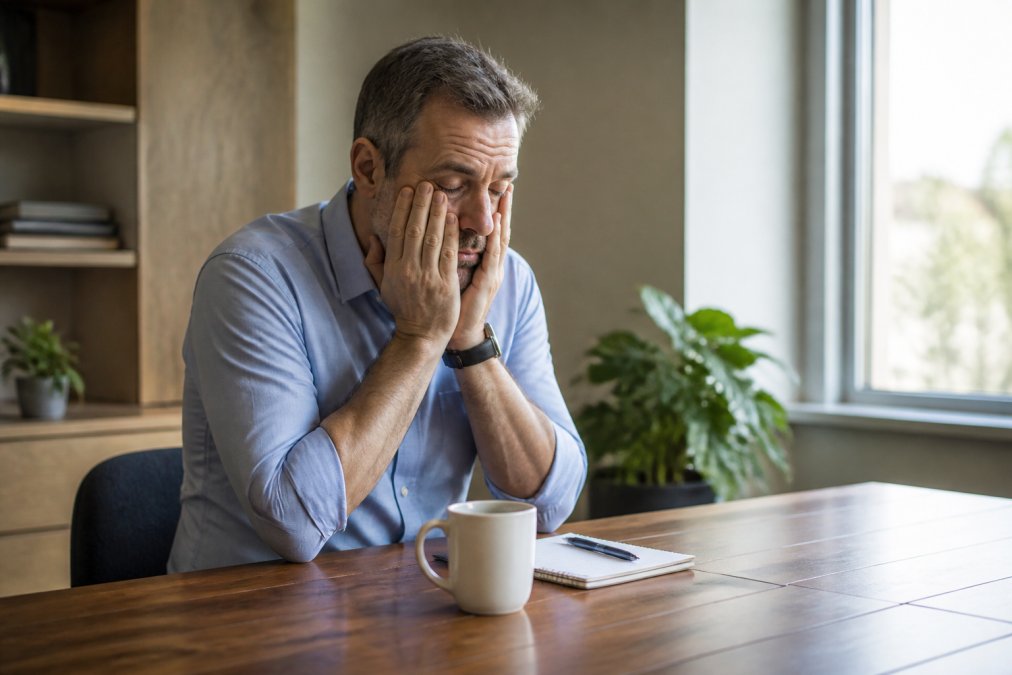
Many men attribute this to stress or work demands. The real culprit is often hormonal.
Muscle and Body Composition Changes
Testosterone is anabolic. It builds and maintains muscle tissue. Low testosterone reverses this process.
You notice muscle definition fading despite maintaining your workout routine. Strength plateaus or declines. Recovery takes longer. You’re losing muscle mass while simultaneously gaining body fat, particularly around the midsection and chest.
Low testosterone increases visceral fat accumulation, the dangerous fat that surrounds organs and drives metabolic dysfunction. Meanwhile, lean muscle mass declines. Some men develop gynecomastia, breast tissue enlargement, because low testosterone shifts the testosterone-to-estrogen ratio.
Sexual Health and Erectile Dysfunction
Low testosterone directly impacts sexual function. Libido declines noticeably. Morning erections disappear. Sexual interest drops, creating confusion and sometimes relationship strain.
Erectile dysfunction often follows. Testosterone is essential for maintaining healthy blood vessel function and nitric oxide production, both critical for erections. Without adequate testosterone, achieving and maintaining erections becomes difficult or impossible. Many men also experience delayed ejaculation or reduced ejaculation volume.
Mental and Emotional Symptoms
Testosterone affects the brain profoundly through receptors throughout the prefrontal cortex and limbic system.
Depression is common with low testosterone, a persistent flatness, lack of motivation, and difficulty finding joy in activities you once enjoyed. Irritability and mood swings often accompany this. Small frustrations trigger disproportionate anger. Anxiety can spike. Some men experience brain fog, difficulty concentrating, and slower mental processing.
Confidence takes a hit. Low testosterone correlates with reduced assertiveness and social withdrawal. Men describe feeling less "themselves", less confident at work, less comfortable in social situations.
These psychological changes are real and measurable. Testosterone receptors in the brain regulate dopamine and serotonin production. Optimize testosterone, and mood, motivation, and cognitive clarity often improve significantly.
Age-Related Decline Versus Clinical Hypogonadism
This distinction is crucial and often missed by standard primary care.
Age-related decline is gradual. Testosterone naturally drops about 1% per year after age 30 (peer-reviewed research). This is normal physiology.
Clinical hypogonadism is when testosterone falls below the functional threshold for health, typically below 300 ng/dL, or when symptoms of deficiency are present despite "normal range" lab results from older reference standards.
Many men get failed by their primary care doctor who orders a single testosterone test, sees a result in the "normal range," and dismisses their symptoms. But "normal range" is often based on outdated reference standards. A testosterone level of 350 ng/dL might be technically "normal" by old standards but insufficient for optimal function.
Additionally, testosterone fluctuates throughout the day. A single test taken at 2 PM tells you almost nothing. Testosterone peaks in the morning and declines throughout the day. Some men have symptoms of hypogonadism despite mid-range testosterone because their bodies are particularly sensitive to testosterone, or because their free testosterone (the bioavailable form) is low even though total testosterone appears adequate.
The practical difference: age-related decline is managed through lifestyle optimization. Clinical hypogonadism often requires Testosterone Replacement Therapy (TRT) to restore function and resolve symptoms.
How to Get a Testosterone Blood Test
Testing is straightforward, but doing it correctly matters. A poorly timed or incomplete test gives you bad information.
What to Expect During Testing
Schedule your test for early morning, ideally between 7 and 10 AM. Testosterone peaks in the morning and declines throughout the day. Fast overnight if possible. Eat nothing after 10 PM the night before.
The phlebotomist will draw blood from your arm, typically one vial. The process takes two minutes.
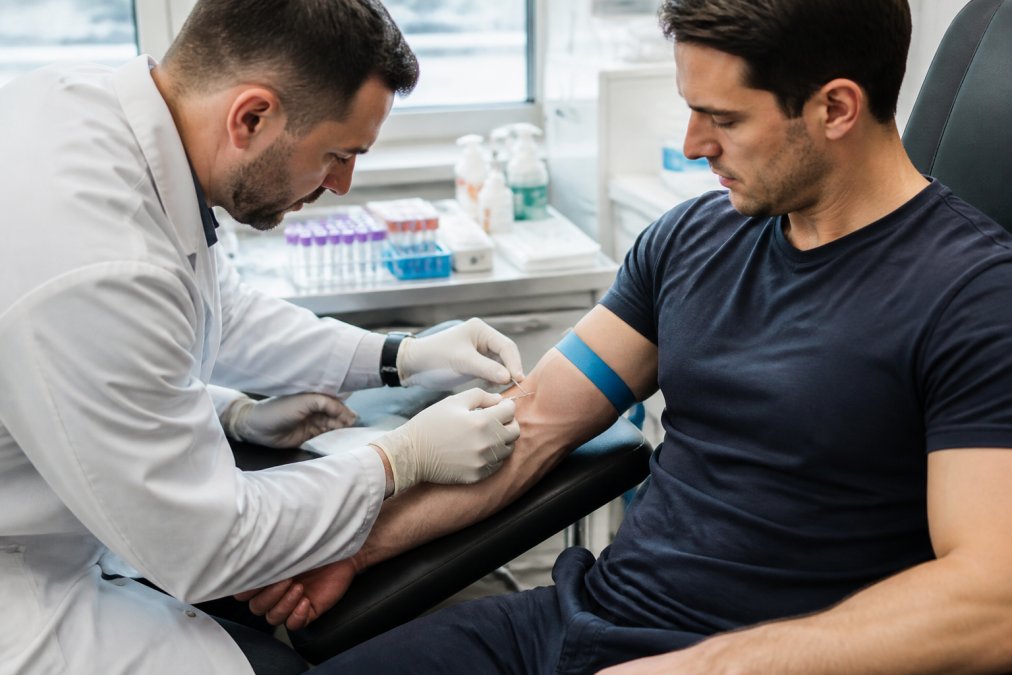
Request a comprehensive panel, not just total testosterone. You want:
- Total testosterone
- Free testosterone
- SHBG (sex hormone-binding globulin)
- Estradiol
- LH (luteinizing hormone)
- FSH (follicle-stimulating hormone)
This full picture tells you whether low testosterone is primary (testicular issue) or secondary (pituitary/hypothalamic issue). Results typically come back within 24-48 hours.
Understanding Your Results
Total testosterone: Normal range is typically 300-1000 ng/dL (the NIH). Below 300 ng/dL is clinically low. Between 300-400 is borderline and often symptomatic.
Free testosterone: This is the testosterone your body can actually use. It should be roughly 50-210 pg/mL. Free testosterone matters more than total testosterone because much of your total testosterone is bound to SHBG and unavailable.
SHBG: Sex hormone-binding globulin binds testosterone and makes it unavailable. High SHBG means more of your testosterone is bound and unavailable.
LH and FSH: These pituitary hormones stimulate testosterone production. If they’re low while testosterone is low, you have secondary hypogonadism (pituitary problem). If they’re high while testosterone is low, you have primary hypogonadism (testicular problem).
Estradiol: Testosterone converts to estradiol. Elevated estradiol with low testosterone suggests excess aromatization.
Don’t try to interpret these alone. A physician experienced with testosterone optimization will look at the complete picture, your symptoms, your labs, your age, and your health history to determine if treatment is warranted.
Testosterone Replacement Therapy Benefits and Considerations
TRT is not a casual decision. It’s a long-term commitment that requires ongoing medical supervision. But for men with genuine hypogonadism, the benefits can be transformative.
Expected Benefits of TRT
When testosterone is optimized through TRT, men typically experience:
Energy restoration. Fatigue lifts for many men. You wake feeling rested. Afternoon crashes diminish.
Muscle recovery and growth. Strength improves. You recover faster from workouts. Muscle definition returns. Body composition shifts toward less fat and more muscle.
Sexual function improvement. Libido returns. Morning erections resume. Erectile function improves. Orgasms feel more intense.
Mood and confidence. Depression and flatness lift. Motivation returns. Irritability decreases. Confidence improves. Cognitive clarity sharpens.
Metabolic improvements. Metabolism speeds up. Weight management becomes easier. Insulin sensitivity improves.
These benefits typically appear gradually over time. Some changes (energy, mood) happen quickly. Others (muscle gain, body composition shifts) take longer.
Risks and Side Effects of TRT
TRT is not risk-free. It’s important to understand potential downsides before starting.
Cardiovascular considerations. Testosterone can increase red blood cell production (polycythemia). Elevated hematocrit increases blood viscosity and cardiovascular risk. Regular monitoring prevents this. Men with existing heart disease or stroke history need careful evaluation.
Prostate health. Testosterone can stimulate prostate growth and increase PSA (prostate-specific antigen). Men with prostate cancer history should not use TRT. Others need baseline PSA testing and regular monitoring.
Testicular atrophy. Exogenous testosterone suppresses your body’s natural testosterone production. Your testes may shrink. This typically reverses after stopping TRT, but fertility can be affected during treatment.
Acne and skin changes. Increased testosterone can trigger acne, particularly on the chest and back. Hair loss may accelerate in men genetically predisposed to male pattern baldness.
Mood changes. Some men experience increased irritability on TRT, though this is less common than popular media suggests.
Sleep apnea. TRT can worsen existing sleep apnea. Screening for sleep apnea before starting TRT is important.
Liver function. Oral testosterone formulations can affect liver enzymes. Injectable and transdermal forms are safer for liver health.
Long-term commitment. Once you start TRT, stopping it returns testosterone to baseline (often low). This is a long-term commitment.
The key is informed consent and ongoing medical supervision. A responsible clinic monitors you regularly, checking blood work, adjusting dosing, and screening for complications.
Is Testosterone Therapy Worth It for Your Situation
This is ultimately a personal decision, but certain factors make it more or less appropriate.
TRT makes sense if:
- You have confirmed low testosterone (ideally multiple tests, morning draws)
- You have clear symptoms of hypogonadism
- Lifestyle optimization alone hasn’t resolved your symptoms
- You’re willing to commit to ongoing medical monitoring
- You don’t have contraindications (active prostate cancer, untreated sleep apnea, uncontrolled cardiovascular disease)
- You understand the risks and benefits
TRT may not be right if:
- Your testosterone is low-normal but you have no symptoms
- You’re seeking TRT purely for performance enhancement without genuine deficiency
- You have significant medical contraindications
- You’re unwilling to commit to regular blood work and physician oversight
- You’re hoping TRT will fix problems that are primarily psychological or relationship-based
The cost-benefit analysis is individual. For a 50-year-old man with confirmed hypogonadism experiencing fatigue, erectile dysfunction, and depression, TRT often delivers life-changing improvements. For a 35-year-old with borderline-low testosterone and mild fatigue, aggressive lifestyle changes might be sufficient.
A physician who takes time to understand your situation, reviews your complete labs, and discusses risks honestly can help you make an informed decision.
At Socal Mens Clinic Virtual, we use a lab-first approach. Your labs guide the conversation. We don’t push TRT on anyone who doesn’t need it. We also don’t dismiss genuine hypogonadism because your testosterone is technically "in range" by outdated standards. Our licensed California physicians review your complete picture, symptoms, labs, medical history, and lifestyle to recommend what actually makes sense for you.
Next Steps: Getting a Professional Evaluation
If you recognize yourself in these symptoms, the next step is straightforward: get tested and talk to someone who specializes in testosterone optimization.
Schedule a consultation with a physician experienced in men’s health and hormone optimization. Bring your symptoms, your health history, and any previous lab work. If you haven’t been tested, request comprehensive hormone testing.
Be honest about your symptoms. Fatigue, sexual dysfunction, mood changes, body composition shifts, these are medical symptoms that deserve professional attention.
Expect your doctor to ask about sleep quality, stress levels, diet and exercise habits, medications, family history, sexual function, energy levels, and mood. These questions inform whether TRT is appropriate and what additional monitoring you might need.
If TRT is recommended, understand the protocol. How often will you be tested? How is dosing adjusted? What side effects should you report immediately? How long will you need to continue treatment?
A good clinic provides ongoing support. You’re not abandoned after your first prescription. You get regular check-ins, lab monitoring, dosage adjustments, and honest conversations about how you’re responding.
Socal Mens Clinic Virtual offers virtual consultations with licensed California physicians who specialize in men’s health. We use a lab-first approach, your bloodwork guides treatment decisions. We provide ongoing medical support, clear explanations of what’s happening in your body, and personalized treatment plans based on your unique biology. Unlike standard insurance-based care, we have time to actually listen and optimize your treatment rather than rushing through a 15-minute appointment.
=== FAQ ANSWERS (audit these too, same rules) ===
[1] Q: What are the primary physical signs of low testosterone?
A: The most common physical signs of low testosterone include persistent fatigue despite adequate sleep, decreased muscle mass and strength, increased body fat especially around the abdomen, erectile dysfunction, and reduced libido. Many men also experience hair loss on the body and face, decreased bone density, and hot flashes. These symptoms often develop gradually, making them easy to attribute to aging or stress rather than a hormonal issue.
[2] Q: How do I get a testosterone blood test?
A: Contact a healthcare provider who can order a testosterone blood test. The best time to test is early morning, as testosterone levels follow a circadian rhythm and are highest between 7-11 a.m. Your provider will typically order serum testosterone levels, and some may also check free testosterone and other hormone markers. Many men’s health clinics offer virtual consultations and lab work through services like LabCorp, making testing convenient without requiring an in-person office visit.
[3] Q: What are the main benefits of testosterone replacement therapy?
A: Testosterone replacement therapy can improve energy levels, increase muscle mass and strength, enhance sexual function and libido, improve mood and cognitive focus, and support better sleep quality. Many men also experience improved metabolic function and easier weight management. Results typically develop over weeks to months, with some benefits appearing sooner than others. However, TRT is not a quick fix and requires ongoing medical monitoring to ensure safety and effectiveness.
[4] Q: Is testosterone therapy worth it if my doctor said my levels are ‘normal’?
A: Normal lab ranges are population averages and don’t account for your individual baseline or symptoms. Some men feel significantly better at higher levels within the normal range, while others experience symptoms even at mid-range values. A lab-first approach using comprehensive testing can help identify whether your current levels are adequate for your specific physiology and symptoms. A second opinion from a specialist experienced in hormone optimization may reveal opportunities your primary care doctor missed.
[5] Q: What is the difference between normal aging and clinical hypogonadism?
A: Normal aging involves a gradual testosterone decline of about 1% per year after age 30, which most men tolerate well. Clinical hypogonadism (low testosterone) produces significant symptoms that interfere with daily function, sexual performance, or quality of life. The key distinction is symptom severity and serum testosterone levels. Men with hypogonadism typically have testosterone below 300 ng/dL along with clear symptoms, while age-related decline may not require treatment if symptoms are minimal.
[6] Q: How does low testosterone affect mood and mental health?
A: Low testosterone is strongly linked to mood changes including depression, irritability, anxiety, and difficulty concentrating or experiencing brain fog. Testosterone influences neurotransmitters and affects the brain’s emotional processing centers. Men with low testosterone often report feeling unmotivated, experiencing mood swings, or losing interest in activities they once enjoyed. These psychological symptoms can be as disruptive as physical ones and often improve significantly with appropriate treatment.
[7] Q: What are the risks and side effects of testosterone replacement therapy?
A: Common side effects include acne, fluid retention, and breast tissue enlargement (gynecomastia). TRT can increase red blood cell count, potentially raising blood clotting risk. Some men experience testicular atrophy or reduced sperm production. Long-term risks require monitoring, including effects on prostate health and cardiovascular function. This is why medical supervision with regular lab work is essential. Not all men experience side effects, and many can be managed or prevented with proper dosing and monitoring.
Frequently Asked Questions
What are the primary physical signs of low testosterone?
The most common physical signs of low testosterone include persistent fatigue despite adequate sleep, decreased muscle mass and strength, increased body fat especially around the abdomen, erectile dysfunction, and reduced libido. Many men also experience hair loss on the body and face, decreased bone density, and hot flashes. These symptoms often develop gradually, making them easy to attribute to aging or stress rather than a hormonal issue.
How do I get a testosterone blood test?
Contact a healthcare provider who can order a testosterone blood test. The best time to test is early morning, as testosterone levels follow a circadian rhythm and are highest between 7-11 a.m. Your provider will typically order serum testosterone levels, and some may also check free testosterone and other hormone markers. Many men's health clinics offer virtual consultations and lab work through services like LabCorp, making testing convenient without requiring an in-person office visit.
What are the main benefits of testosterone replacement therapy?
Testosterone replacement therapy can improve energy levels, increase muscle mass and strength, enhance sexual function and libido, improve mood and cognitive focus, and support better sleep quality. Many men also experience improved metabolic function and easier weight management. Results typically develop over weeks to months, with some benefits appearing sooner than others. However, TRT is not a quick fix and requires ongoing medical monitoring to ensure safety and effectiveness.
Is testosterone therapy worth it if my doctor said my levels are 'normal'?
Normal lab ranges are population averages and don't account for your individual baseline or symptoms. Some men feel significantly better at higher levels within the normal range, while others experience symptoms even at mid-range values. A lab-first approach using comprehensive testing can help identify whether your current levels are adequate for your specific physiology and symptoms. A second opinion from a specialist experienced in hormone optimization may reveal opportunities your primary care doctor missed.
What is the difference between normal aging and clinical hypogonadism?
Normal aging involves a gradual testosterone decline of about 1% per year after age 30, which most men tolerate well. Clinical hypogonadism (low testosterone) produces significant symptoms that interfere with daily function, sexual performance, or quality of life. The key distinction is symptom severity and serum testosterone levels. Men with hypogonadism typically have testosterone below 300 ng/dL along with clear symptoms, while age-related decline may not require treatment if symptoms are minimal.
How does low testosterone affect mood and mental health?
Low testosterone is strongly linked to mood changes including depression, irritability, anxiety, and difficulty concentrating or experiencing brain fog. Testosterone influences neurotransmitters and affects the brain's emotional processing centers. Men with low testosterone often report feeling unmotivated, experiencing mood swings, or losing interest in activities they once enjoyed. These psychological symptoms can be as disruptive as physical ones and often improve significantly with appropriate treatment.
What are the risks and side effects of testosterone replacement therapy?
Common side effects include acne, fluid retention, and breast tissue enlargement (gynecomastia). TRT can increase red blood cell count, potentially raising blood clotting risk. Some men experience testicular atrophy or reduced sperm production. Long-term risks require monitoring, including effects on prostate health and cardiovascular function. This is why medical supervision with regular lab work is essential. Not all men experience side effects, and many can be managed or prevented with proper dosing and monitoring.
Getting tested and evaluated is the first step toward understanding what’s really happening with your health. Low testosterone is treatable. The energy, muscle, sexual function, and mood you’ve lost don’t have to stay lost. Many men discover that optimizing testosterone transforms not just their physical health but their confidence, relationships, and quality of life. Get started with Socal Mens Clinic Virtual and learn whether testosterone optimization is the answer for your situation.
This article was written using GrandRanker