
Last Updated: October 29, 2026
Quick Summary
Sleep apnea treatment restores energy by keeping your airway open so your body can complete full sleep cycles, reducing breathing interruptions and sleep fragmentation. Fewer interruptions mean better sleep quality and more daytime energy, and treating OSA can improve daytime alertness and overall quality of life.
- CPAP delivers a steady stream of air through a mask to hold the airway open and prevent apnea episodes.
- Some people notice changes in daytime sleepiness within a couple of weeks of consistent CPAP use.
- Aim for consistent treatment use for at least four weeks before deciding it is not working.
- Early gains usually appear in morning grogginess and daytime sleepiness before focus and mood improve.
- Track morning alertness, afternoon energy dips, and CPAP usage hours daily, and review the log every two weeks.
Table of Contents
- Why Sleep Apnea Drains Your Energy
- How Sleep Apnea Treatment Restores Energy Levels
- How Long Does CPAP Take to Work?
- CPAP Therapy Benefits Beyond Energy
- Exercise and Sleep Apnea: A Two-Way Relationship
- Measuring Your Energy Improvement: A Simple Tracking Plan
- When Fatigue Persists Despite Treatment
- Frequently Asked Questions
Why Sleep Apnea Drains Your Energy
If you wake up tired no matter how long you sleep, your airway may be the problem. Obstructive sleep apnea (OSA) is a sleep disorder where the upper airway collapses during sleep, causing repeated breathing interruptions that fragment rest and leave you exhausted. The American Academy of Sleep Medicine notes that OSA is one of the most common sleep disorders in adults, and it is frequently undiagnosed.
What Happens During an Apnea Episode
During an apnea episode, the muscles in the back of your throat relax and the airway narrows or closes. Breathing stops for several seconds. Your oxygen level drops. Your brain jolts you partially awake to restart breathing. This cycle can repeat many times an hour, all night.
You rarely remember these awakenings. But each one pulls you out of deep, slow-wave sleep, the stage where your body restores itself. The result is sleep fragmentation: you spend enough hours in bed, but very little time in restful sleep.
Signs Your Fatigue Is Sleep-Related
Not all tiredness comes from poor sleep. But some signs point clearly to sleep-disordered breathing:
- Morning sluggishness that fades slowly, if at all
- Excessive daytime sleepiness, especially during meetings or driving
- Waking with a dry mouth or headache
- Loud snoring reported by a partner
- Poor concentration and memory slips
- Irritability or low mood
If several of these sound familiar, a sleep study is worth discussing with a physician.
How Sleep Apnea Treatment Restores Energy Levels
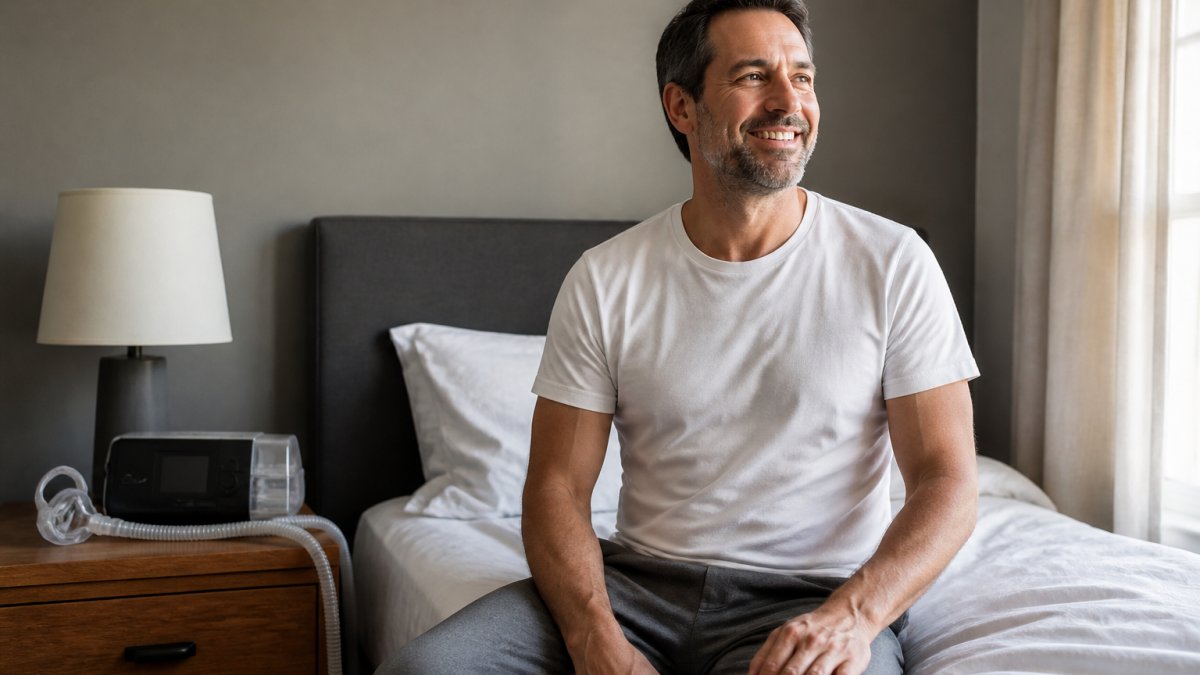
Sleep apnea treatment restores energy by keeping your airway open so your body can complete full sleep cycles. The most common option is continuous positive airway pressure, or CPAP. A CPAP machine delivers a steady stream of air through a mask, holding the airway open and preventing apnea episodes.
Each approach reduces breathing interruptions. Fewer interruptions mean less sleep fragmentation. Over time, that translates into better sleep quality and more daytime energy. The National Heart, Lung, and Blood Institute explains that treating OSA can improve daytime alertness and overall quality of life.
How Long Does CPAP Take to Work?
Response to CPAP varies. Some people notice changes in daytime sleepiness within a couple of weeks of consistent use, while fuller gains can take longer. The timeline varies by person, symptom severity, and how consistently the machine is used.
A practical way to think about it is in phases. For answers to common questions about starting treatment, see our FAQ. The first few nights are about tolerating the mask and pressure. The first two weeks are about establishing consistent use and noticing early changes in morning grogginess.
The First Week: What to Expect
The first week is an adjustment period. Some people feel sharper after just a few nights, while others need more time. Common early experiences include:
- Mild mask discomfort or air leaks
- A dry mouth or nose
- Waking briefly to adjust the mask
- A sense of pressure or difficulty exhaling against the airflow
These usually ease as mask fit improves and humidity settings are adjusted. A common mistake is giving up after two rough nights.
Weeks 2-4 and Beyond: Building Momentum
By the second to fourth week, most consistent users report steadier energy through the day. Morning sluggishness fades. Concentration improves. Beyond the first month, the gains compound as your body settles into deeper, less fragmented sleep.
It helps to set expectations by tracking your own progress rather than comparing yourself to someone else. A simple daily log of morning alertness, afternoon energy dips, and machine usage hours can show whether you are on track. If usage hours are consistently low, address that first before judging results.
Give treatment a fair trial: aim for consistent use for at least four weeks before deciding it is not working. Most early problems with fit, dryness, or pressure have practical solutions.
What May Improve First, and What Takes Longer
Early gains are usually in morning grogginess and daytime sleepiness. Improvements in focus, mood, and exercise tolerance often follow over the first one to three months. Some downstream benefits, such as cardiovascular and metabolic effects, are better thought of as longer-term goals rather than quick wins. Response varies, and no one should promise a specific timeline. If you have not noticed any change after several weeks of consistent use, that is a signal to review treatment effectiveness with your clinician rather than to give up.
CPAP Therapy Benefits Beyond Energy
CPAP therapy benefits reach further than feeling less tired. Better sleep supports mood, cognitive sharpness, and memory. Some people report improved focus and mood as their sleep improves. Untreated sleep apnea is associated with ongoing strain on the cardiovascular system, so heart health is worth discussing with your clinician. The U.S. Food and Drug Administration regulates these devices, so you can check that any machine you use is cleared for sale.
Exercise and Sleep Apnea: A Two-Way Relationship
Exercise and sleep apnea affect each other in both directions. Regular physical activity can reduce symptom severity, and successful treatment makes exercise easier to sustain. It is a feedback loop, and it works in your favor once you get it moving.
How Exercise Improves Sleep Apnea
Physical activity supports weight management and body mass index, both of which influence OSA severity. Exercise also helps maintain upper airway muscle tone. Many men find that regular movement improves sleep quality even before other changes take hold.
How Treatment Makes Exercise Easier
Fatigue is one of the biggest barriers to working out. When treatment lifts that fog, workouts feel less like a chore. Recovery improves. You show up more consistently. That consistency, in turn, supports weight management and symptom control.
Measuring Your Energy Improvement: A Simple Tracking Plan
You cannot manage what you do not measure. A simple daily log turns vague feelings into data you can act on. Here is a tracking plan we suggest to men starting treatment:
| What to Track | How to Score It | How Often | What It Tells You |
|---|---|---|---|
| Morning alertness | 1-10 scale, 30 min after waking | Daily | Early treatment response |
| Afternoon energy dip | Time it starts | Daily | Whether daytime sleepiness is easing |
| CPAP usage hours | Machine readout | Daily | Adherence, the biggest predictor of results |
| Workout energy | 1-10 scale, post-exercise | 3x per week | Physical recovery trend |
| Mood and focus | 1-10 scale | Daily | Cognitive and mood gains |
Review the log every two weeks. Look for trends, not single bad days. If usage hours are low, fix that first before judging results.
When Fatigue Persists Despite Treatment
Sometimes energy improves but plateaus. Sometimes it barely moves. Persistent fatigue despite treatment is common, and it usually has an answer. The first step is checking treatment adherence and mask fit. The second is ruling out other causes with a healthcare professional. To book a lab-based evaluation, visit contact us. You can review our services to see what the clinic offers for evaluation.
Troubleshooting Common Treatment Barriers
- Low usage hours: aim for consistent nightly use; partial nights give partial results
- Mask leaks: refit or try a different mask style
- Dryness or congestion: adjust humidity or talk to your provider
- Uncomfortable pressure: ask about pressure settings or auto-adjusting machines
- Mask discomfort or skin irritation: try a different cushion size or style, and keep the mask clean
Watch out: pushing through a badly fitting mask for weeks can make it harder to stay consistent with treatment. Address fit early.
Verifying That Treatment Is Actually Working
Feeling better is not the only measure. Your clinician can review machine data such as usage hours, leak rates, and residual breathing events. If those numbers look good but you still feel tired, the next step is to look beyond sleep apnea.
Other Causes Your Doctor Should Check
If sleep apnea treatment is working but fatigue lingers, other factors may be at play. These can include insufficient sleep duration, poor sleep habits, medication side effects, thyroid problems, anemia, depression or anxiety, and low testosterone, which is worth discussing especially for men in midlife. Low testosterone is one possible contributor worth discussing with a qualified clinician. If you want to understand how hormone treatment affects energy, read how long until TRT improves energy levels.
Do not stop treatment on your own because you still feel tired. Untreated sleep apnea carries risks, and your clinician needs to review your data before any change. If you are experiencing severe daytime sleepiness, avoid driving or operating machinery until you have spoken with a healthcare professional.
A Practical Next-Step Plan
- Review your machine data with your clinician: usage hours, leak rate, and residual events.
- Revisit mask fit and comfort if usage is inconsistent.
- Discuss other possible causes of fatigue, including lab work where appropriate.
- Track symptoms for two to four weeks so your clinician has a clear picture.
Persistent fatigue is not a reason to give up on treatment. It is a reason to look more closely at both the treatment and the other factors that affect energy.
Frequently Asked Questions
Can sleep apnea get better with exercise?
Exercise can help. Regular physical activity, especially aerobic exercise, has been linked to reduced apnea severity and better sleep quality. It also supports weight management, which matters because excess weight is a major risk factor for obstructive sleep apnea. Exercise alone is not a substitute for medical treatment, but it works well alongside CPAP therapy or an oral appliance. Aim for at least 150 minutes of moderate activity per week, and talk to your doctor before starting a new routine if you have other health conditions.
How long does it take to feel better after starting CPAP therapy?
Some people notice less morning sluggishness within the first week of consistent CPAP use. Others need a few weeks before daytime energy levels clearly improve. The timeline varies with how severe your sleep apnea was, how many hours you use the machine each night, and whether you have other health issues. If you still feel exhausted after a month of regular use, tell your sleep specialist. They can check mask fit, pressure settings, and whether another condition is contributing to your fatigue.
What should I do if I still feel tired while using CPAP?
First, confirm you are using CPAP for at least four hours per night and that the mask seals properly. Leaks and discomfort are common reasons treatment underperforms. Ask your provider to review your machine’s data for apnea episodes and adherence. If those look good, your doctor should screen for other causes of fatigue, including thyroid problems, low testosterone, anemia, or depression. Persistent fatigue after treatment is a signal to dig deeper, not to give up on sleep apnea treatment.
Does treating sleep apnea improve mood and concentration?
Yes. Sleep fragmentation from apnea episodes disrupts slow-wave sleep, which is important for cognitive sharpness and emotional regulation. Treating sleep apnea with CPAP or an oral appliance can improve concentration, memory, and mood over time. Many people report fewer irritability and better focus at work. These benefits depend on consistent treatment adherence, so mask fit and follow-up care matter as much as the device itself.
Fatigue that persists after treatment deserves a closer look. At Socal Mens Clinic Virtual, our licensed California physicians use a lab-first approach to find what standard checks can miss. We offer 100% virtual telehealth visits, no insurance needed, and ongoing medical support built into every plan. Get started with Socal Mens Clinic Virtual and find the root cause of your fatigue.