
Table of Contents
- What You’ll Need Before Your Testosterone Blood Test
- Testosterone Blood Test Fasting Requirements
- Optimal Time for Testosterone Blood Test
- Factors Affecting Testosterone Test Results
- Medications and Supplements That Interfere With Results
- What Happens During the Blood Draw
- Common Mistakes to Avoid
- Frequently Asked Questions
Last Updated: October 1, 2026
What You’ll Need Before Your Testosterone Blood Test
Learning how to prepare for a testosterone blood test starts before you walk into the lab. The preparation matters more than most people realize. Your habits in the days leading up to the test directly affect whether your results show your actual hormone levels or a skewed picture.
Proper preparation is the foundation of accurate testing. You’ll need a few key things in place: a clear understanding of fasting requirements, knowledge of which medications to pause, and awareness of lifestyle factors that shift your hormone levels. Without this groundwork, even the best lab can’t give you reliable data.
Start by scheduling your testosterone blood test for early morning. This timing matters because testosterone naturally peaks in the early hours and drops throughout the day. A 7 a.m. draw gives you the most accurate baseline compared to an afternoon appointment.
You’ll also need to know your current medications and supplements. Some substances interfere with test accuracy, and your doctor needs this list before you arrive. Write down everything you take, including over-the-counter vitamins and herbal products.
Testosterone Blood Test Fasting Requirements
Fasting before a testosterone blood test is standard practice. You should fast for 8 to 12 hours before your appointment. This means no food, no drinks except water, and no calories from any source.
Why does fasting matter? Food temporarily affects hormone levels and can create false readings. When your digestive system is active, it triggers metabolic changes that shift your testosterone measurements. An empty stomach gives the lab a clean picture of your baseline hormone status.
If your appointment is at 7 a.m., stop eating at 7 p.m. the night before. Water is fine throughout the fasting window. Many people find it easier to fast overnight than to stop eating during the day, so morning appointments work best for most schedules.
Set a phone alarm the night before your test. This reminds you when fasting begins and helps you avoid accidentally eating before your appointment. Missing the fasting window means rescheduling, which delays your results by another week.
Some labs combine testosterone testing with other blood work that also requires fasting. Check your lab requisition to confirm the fasting duration. If you’re unsure, call the lab the day before your appointment and ask directly.
Optimal Time for Testosterone Blood Test
The best time for a testosterone blood test is between 7 a.m. and 10 a.m. This window captures your peak testosterone levels. Testosterone follows a strong circadian rhythm, meaning it rises and falls on a predictable daily cycle tied to your sleep-wake schedule.
Your testosterone levels are highest shortly after waking. By noon, they’ve already dropped 20 to 30 percent. By evening, they’re significantly lower. This natural variation is why timing your draw matters so much.
If you can’t get an early morning appointment, afternoon tests are still valid but will show lower readings. The key is consistency. If you test in the afternoon one time and morning the next time, the difference in results won’t reflect actual changes in your hormone levels.
Testing at different times of day can make it impossible to track real progress. If you’re monitoring your testosterone over weeks or months, try to schedule all your tests at the same time. This eliminates the circadian variation and shows you whether your actual levels are changing.
Many labs have limited early morning slots, especially on weekdays. Call ahead or schedule online as soon as you know you need testing. Early appointments fill up quickly, particularly on Mondays and Tuesdays when many people schedule routine health checks.
Factors Affecting Testosterone Test Results
Several lifestyle factors shift your testosterone levels in the days before your test. Understanding these variables helps you control what you can and interpret your results accurately.
Exercise and Physical Activity
Intense exercise in the 24 to 48 hours before how to prepare for a testosterone blood test can artificially lower your readings. Heavy resistance training and high-intensity interval training trigger cortisol release, which temporarily suppresses testosterone. This creates a false low that doesn’t reflect your baseline state.
Light to moderate activity is fine. A 20-minute walk, easy swimming, or gentle yoga won’t affect your results. The problem comes from pushing hard in the gym or doing intense cardio sessions the day before testing.
If you’re a regular lifter or runner, you face a choice. You can either pause intense training for two days before your test, or you can accept that your reading will be slightly lower than your true baseline. Many men choose to train normally and note the timing in their records. Your doctor can account for this when interpreting your results.
If you train hard regularly, schedule your testosterone test on a rest day or a light training day. This gives you the most accurate picture of your true hormone status without disrupting your normal routine.
Stress and Sleep Quality
Poor sleep and high stress both lower testosterone. Sleep deprivation is one of the strongest suppressors of testosterone production. A single night of bad sleep can reduce your levels by 10 to 15 percent.
Chronic stress keeps cortisol elevated, which actively suppresses testosterone. If you’ve been under heavy stress for weeks, your test will reflect that hormonal state. This isn’t a false reading, it’s accurate data showing that stress is affecting your hormones.
The night before your testosterone blood test, prioritize sleep. Aim for 7 to 9 hours. Put your phone away an hour before bed. Keep your bedroom cool and dark. These basic steps improve sleep quality and stabilize your hormone levels.
For the week leading up to your test, manage stress where you can. This doesn’t mean avoiding all stress, that’s unrealistic. It means being intentional about recovery. Take walks, spend time with people you enjoy, or practice meditation. Even 10 minutes of deep breathing lowers cortisol.
Hydration and Nutrition
Dehydration affects blood concentration and can skew test results. Drink plenty of water in the days before your test, but stop drinking 2 to 3 hours before your appointment. This prevents the need to urinate during the blood draw and keeps your blood at normal concentration. (Source: impact of lifestyle on hormone levels)
Your diet in the days before testing should be consistent with your normal eating pattern. Sudden changes, like a crash diet or a day of heavy eating, can affect hormone levels. Eat normally. Get adequate protein and healthy fats, which support testosterone production.
The night before your test, eat a light dinner. A heavy meal close to bedtime disrupts sleep quality, which we already know affects testosterone. A simple dinner of protein and vegetables works well. Avoid alcohol for at least 24 hours before your test, as it interferes with hormone levels and sleep quality.
Medications and Supplements That Interfere With Results
Some medications and supplements artificially lower testosterone or affect how accurately the lab measures it. Biotin, a common B vitamin supplement, is notorious for interfering with lab equipment (Biotin interference: Underrecognized patient safety risk in laboratory testing). If you take biotin supplements, stop them at least 72 hours before your testosterone blood test.
Corticosteroids used for inflammation or autoimmune conditions suppress testosterone. If you’re on steroids, your doctor needs to know this before interpreting your results. The low testosterone reading may be real and caused by your medication, not a hormone deficiency.
Certain hair loss medications, including finasteride, affect testosterone levels and may lower your readings.
Never stop prescription medications without talking to your doctor. If your medication affects testosterone, that’s important information for your results. Tell your healthcare provider about your test so they can interpret your reading correctly.
Over-the-counter pain relievers like ibuprofen taken regularly can affect testosterone. If you use them daily, mention this to your doctor. Thyroid medications don’t directly affect testosterone but can influence overall hormone balance, so list them on your health history.
What Happens During the Blood Draw
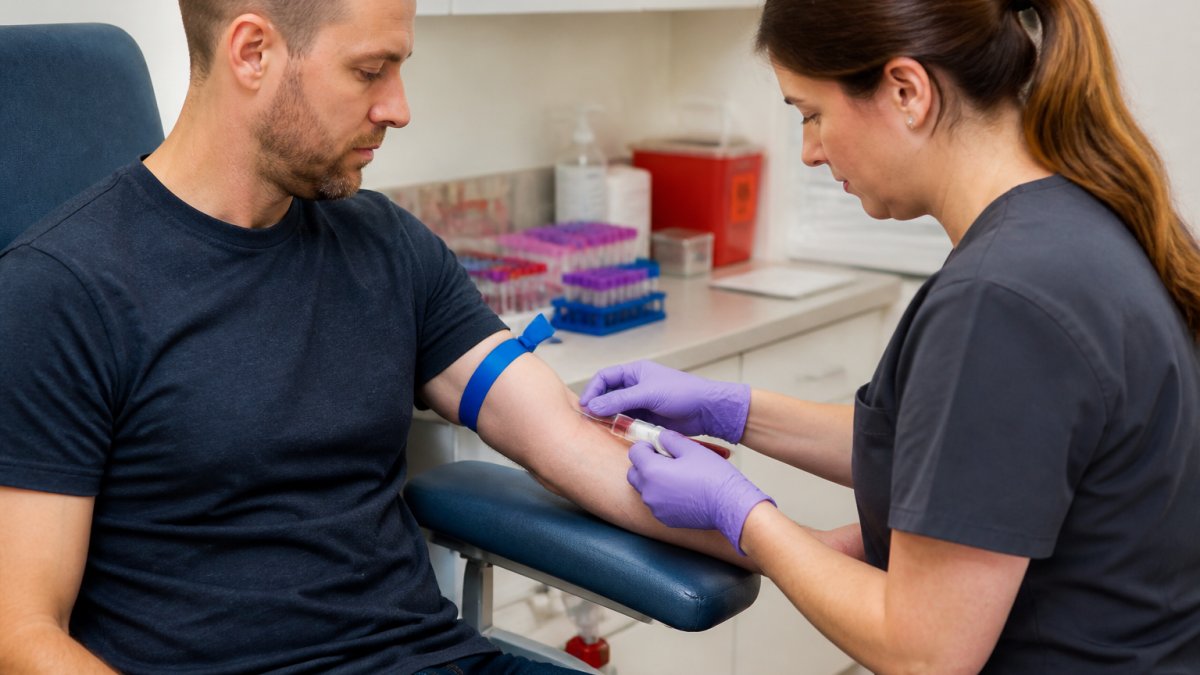
A testosterone blood test is a simple venipuncture procedure. A phlebotomist or nurse will have you sit in a comfortable chair and locate a vein in your inner arm, usually near the elbow. They’ll clean the area with an alcohol wipe and insert a small needle to collect blood into a tube.
Common Mistakes to Avoid
The biggest mistake men make is scheduling their testosterone blood test in the afternoon. You’ll get a lower reading that doesn’t reflect your true baseline. Always ask for an early morning appointment.
The three most important preparation steps are scheduling early morning, fasting properly, and getting good sleep the night before. These three variables control most of the variation in testosterone readings.
Frequently Asked Questions
What should I avoid before a testosterone blood test?
Avoid intense exercise for 24 hours before your test, as strenuous activity can temporarily lower testosterone levels. Skip alcohol the night before and avoid caffeine on the morning of your test. Do not eat or drink anything except water if fasting is required. Stop biotin supplements at least 72 hours beforehand, as biotin can interfere with lab results. Avoid high-stress situations when possible, and get adequate sleep the night before. If you take medications or supplements, consult your physician about whether to pause them before testing.
Why is the optimal time for testosterone blood test important?
Testosterone follows a circadian rhythm, meaning levels are highest in the early morning and decline throughout the day. Testing between 7 and 10 a.m. captures your peak testosterone levels, giving your physician the most accurate baseline for diagnosis. Testing later in the day can underestimate your actual testosterone levels by 20-30 percent. Consistent timing also allows your doctor to compare future results reliably. This is why most labs and physicians recommend morning draws for testosterone testing.
Can medications or supplements affect testosterone test results?
Yes. Biotin (vitamin B7) is a common culprit that interferes with lab assays and should be stopped 72 hours before testing. Anabolic steroids, some corticosteroids, and certain medications can suppress testosterone levels. Herbal supplements like tribulus terrestris or DHEA may influence results. Some prescription medications for depression, anxiety, or blood pressure can affect testosterone. Always inform your physician about every medication and supplement you take, and ask which ones require adjustment before your test.
How do fasting requirements affect testosterone blood test accuracy?
Fasting is typically required to ensure accurate results for comprehensive hormone panels and other bloodwork often ordered alongside testosterone testing. A standard 8-12 hour fast (overnight) is common. Eating before the test, especially high-fat or high-carbohydrate foods, can affect other markers in your panel and make it harder for your physician to interpret your complete hormonal picture. Water is usually permitted during fasting. Your lab requisition will specify exact fasting requirements, so follow those instructions carefully.