
Last Updated: October 25, 2026
Quick Summary
Lab first testosterone therapy starts with comprehensive blood work before any treatment begins, mapping your hormonal picture and cardiovascular markers to determine whether TRT is safe for you. This baseline approach allows clinicians to create personalized treatment plans based on your biological data rather than symptoms alone.
- Baseline testing includes total testosterone on two separate morning draws, free testosterone, LH, FSH, estradiol, CBC, CMP, lipid panel, PSA, and blood pressure review.
- Follow-up monitoring occurs at 4-6 weeks, 3 months, then every 6 months to check testosterone levels, hematocrit, and other safety markers.
- A hematocrit above 54% is a widely used threshold for dose reduction or therapeutic blood donation.
- Men with confirmed hypogonadism on lab testing often see improved energy, mood, and sexual function within 3 to 6 weeks.
- Fertility preservation options like lower doses, hCG, or clomiphene citrate should be discussed before starting therapy if you want to maintain sperm production.
Table of Contents
- What Lab First Testosterone Therapy Actually Means
- TRT Blood Tests Before Treatment: The Foundation of Safety
- Risks and Benefits of Testosterone Replacement Therapy
- Testosterone Therapy Monitoring Panel: What Happens After You Start
- Lab First vs. Standard TRT: Where the Differences Matter
- Questions to Ask a TRT Clinic Before Starting Treatment
- Starting Your Lab First Treatment Plan
- Frequently Asked Questions
What Lab First Testosterone Therapy Actually Means
Lab first testosterone therapy starts with comprehensive blood work before any treatment begins. Instead of relying on symptoms or a single measurement, detailed panels map your hormonal picture, testosterone levels, cardiovascular markers, liver and kidney function, to determine whether TRT is safe for you. (Source: evidence supports modest but meaningful improvements)
At Socal Mens Clinic Virtual, our licensed California physicians use a lab-first approach to create personalized treatment plans based on your biological data.
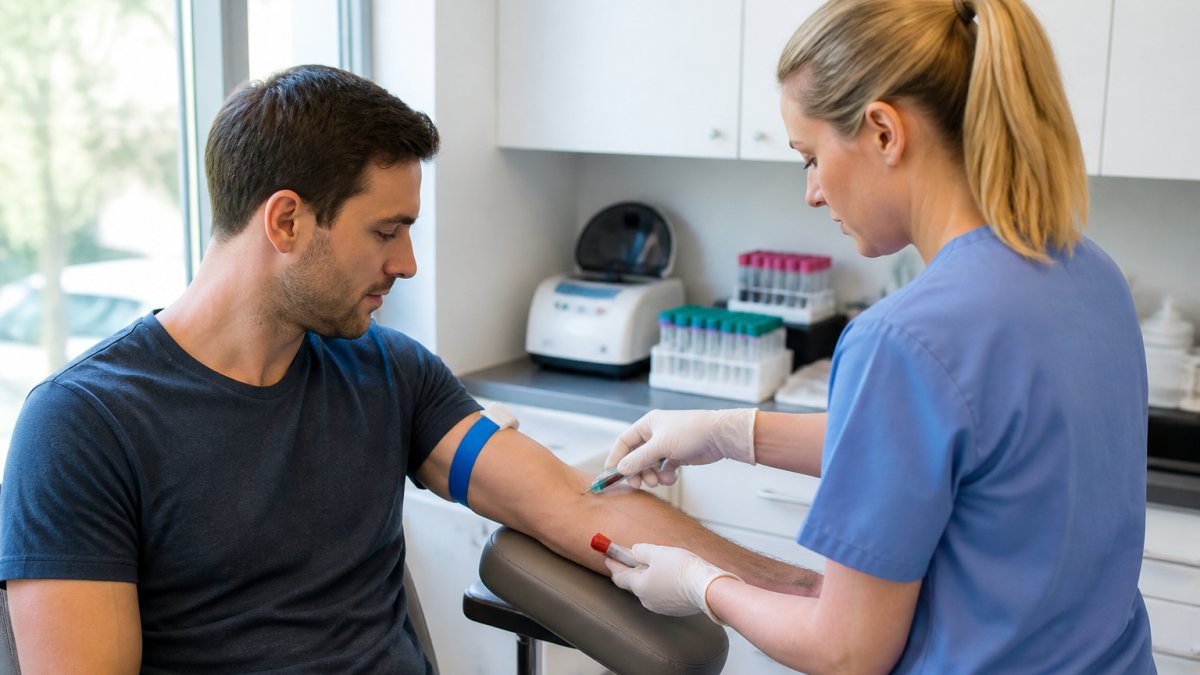
TRT Blood Tests Before Treatment: The Foundation of Safety
Before starting testosterone replacement therapy, a qualified clinician can determine what evaluation is appropriate for you.
You can prepare for a testosterone blood test. You should also learn how to interpret your lab results.
Risks and Benefits of Testosterone Replacement Therapy
Testosterone therapy has potential risks and benefits that should be discussed with a qualified clinician.
What the benefits typically look like
For men with hypogonadism confirmed by low morning testosterone on at least two measurements, the evidence supports modest but meaningful improvements:
- Energy and mood: Many men notice improved energy and mood within 3 to 6 weeks, though the effect varies and is not universal.
- Sexual function: Libido and erectile function often improve within 3 to 6 weeks; the response is dose-dependent and less reliable in men with other causes of erectile dysfunction.
- Body composition: Lean mass tends to increase and fat mass tends to decrease over 3 to 6 months, with the largest changes in men who also resistance train.
- Bone density: Testosterone supports bone mineral density, which matters for men with osteoporosis or osteopenia.
- Anemia: Testosterone stimulates red blood cell production, which can correct mild anemia in some men.
Benefits are not guaranteed or permanent if therapy stops; realistic expectations are part of informed consent.
Cardiovascular considerations
Lab first establishes your cardiovascular baseline before treatment: blood pressure, lipid panel, hematocrit, and a review of your history for heart attack, stroke, heart failure, or uncontrolled hypertension. Men with recent events or poorly controlled heart failure generally are not candidates until stabilized with a cardiologist involved; men with controlled risk factors can often proceed with closer monitoring.
Fertility and sperm production
If you want to preserve fertility, discuss it before your first dose. Learn how TRT affects male fertility and reproductive health. Options include lower doses, concurrent human chorionic gonadotropin (hCG) to maintain testicular function, or clomiphene citrate, which stimulates your own testosterone production. Each has trade-offs to discuss with a clinician who understands your fertility goals.
Other risks worth knowing
For men with confirmed hypogonadism and a careful baseline, benefits often outweigh risks. For men without confirmed low testosterone or with unmanaged cardiovascular disease, the balance shifts against treatment. Lab first tells you which group you are in.
Testosterone Therapy Monitoring Panel: What Happens After You Start
Once you begin therapy, monitoring is your safety net: not just confirming your testosterone level is in range, but catching effects on your blood, heart, liver, and hormone balance before they become problems.
The before-treatment baseline
Before your first dose, a comprehensive panel should include:
- Total testosterone (morning draw, ideally before 10 a.m., on at least two separate days to confirm low levels)
- Free testosterone or calculated free testosterone
- Luteinizing hormone (LH) and follicle-stimulating hormone (FSH) to distinguish primary from secondary hypogonadism
- Estradiol (sensitive assay)
- Complete blood count (CBC) with hematocrit and hemoglobin
- Comprehensive metabolic panel (CMP) for liver and kidney function
- Lipid panel
- Prostate-specific antigen (PSA) for men of appropriate age, after a discussion of prostate risk
- Blood pressure and a review of cardiovascular history
This baseline makes later monitoring meaningful; without it, you have no reference point for what ‘changed’ means.
The follow-up schedule
A common and reasonable schedule used by many clinicians:
| Timepoint | What to check | Purpose |
|---|---|---|
| 4-6 weeks after starting | Total testosterone, hematocrit, blood pressure | Confirm the dose is producing a therapeutic level and check for early hematocrit rise |
| 3 months | Total testosterone, hematocrit, estradiol, PSA (if indicated) | Assess steady-state levels and tolerability |
| Every 6 months | Total testosterone, hematocrit, lipid panel, CMP | Ongoing safety surveillance |
| Annually | Full panel including PSA and prostate assessment as appropriate | Comprehensive review |
Your clinician may adjust this schedule based on dose, response, and results. Men with cardiovascular risk factors, elevated baseline hematocrit, or prostate concerns may need closer monitoring.
What each test is for, and what triggers a change
- Total testosterone: The target is usually the mid-normal range for a healthy young man, not the top of the range. Levels consistently above the normal range suggest the dose is too high; levels below the therapeutic range suggest it is too low. Dose changes are typically made in small increments and rechecked in 4-6 weeks.
- Hematocrit: This is the most common safety signal. A hematocrit above 54% is a widely used threshold for action: dose reduction, holding a dose, or therapeutic blood donation. Some clinicians act at 52-54% depending on cardiovascular risk. Hematocrit should be checked at 4-6 weeks, 3 months, and then every 6-12 months.
- Estradiol: If you develop breast tenderness, gynecomastia, or unexplained mood changes, estradiol should be checked. Routine estradiol monitoring is debated, but many lab-first protocols include it at baseline and at 3 months.
- PSA: A rise in PSA on therapy should prompt evaluation. There is no single threshold that applies to everyone; your clinician will compare against your baseline and your age-related risk.
- Lipids and liver enzymes: Testosterone can lower HDL cholesterol and, less commonly, affect liver enzymes. Abnormal results may prompt a discussion about dose, lifestyle, or further evaluation.
- Blood pressure: Elevated blood pressure on therapy should be managed, not ignored. Some men need dose adjustment or blood pressure medication.
When to escalate
Monitoring only works if abnormal results trigger action:
Lab First vs. Standard TRT: Where the Differences Matter
Socal Mens Clinic Virtual’s licensed California physicians use a lab-first approach to create personalized treatment plans based on your biological data.
Questions to Ask a TRT Clinic Before Starting Treatment
Before committing to any testosterone therapy, get answers to specific questions. Review these common questions to ask a TRT clinic before your first appointment; the quality of answers tells you whether a clinic takes monitoring seriously.
Starting Your Lab First Treatment Plan
If you’re considering testosterone therapy, start with comprehensive lab work. Understand your baseline. Then decide whether treatment makes sense for your specific situation. At Socal Mens Clinic Virtual, our licensed California physicians use this lab-first approach to build personalized treatment plans based on your actual biology, not assumptions. Get started with a detailed lab panel and a consultation that takes your full health picture into account.
Frequently Asked Questions
Does testosterone therapy require blood tests before treatment?
A qualified clinician can discuss what evaluation is appropriate before starting testosterone replacement therapy. Socal Mens Clinic Virtual’s licensed California physicians use a lab-first approach to create personalized treatment plans based on your biological data.
How often should testosterone levels be monitored during TRT?
Monitoring frequency and tests are matters to discuss with a qualified clinician.
What are the main risks and benefits of testosterone replacement therapy?
Testosterone therapy has potential risks and benefits that should be discussed with a qualified clinician.
What questions should I ask a TRT clinic before starting treatment?
Ask a clinic about its diagnostic process, monitoring, and how it handles side effects and dose adjustments. Ask about its qualifications and whether it offers ongoing support.