
Quick Summary
To improve sleep quality after 40, keep a consistent sleep and wake schedule, make the bedroom cool, dark and quiet, and limit caffeine and alcohol in the hours before bed. Regular exercise and stress management also help, and ongoing trouble sleeping deserves a medical evaluation.
- Pick a wake-up time you can keep every day, including weekends.
- Keep your bedroom around 65 to 68 degrees Fahrenheit for sleep.
- Stop caffeine at least 8 hours before bedtime.
- Limit alcohol, especially within three hours of sleep.
- See a clinician about a sleep study if snoring or breathing pauses occur.
Table of Contents
- Why Sleep Gets Harder After 40
- Step 1: Set a Consistent Sleep Schedule
- Step 2: Optimize Your Bedroom for Sleep
- Step 3: Adjust Caffeine, Alcohol, and Evening Routines
- Step 4: Use Exercise and Stress Management to Sleep Better
- Step 5: Recognize Insomnia in Your 40s as a Men’s Health Issue
- Common Mistakes and Natural Remedies to Discuss With a Doctor
- Booking Your Sleep and Hormone Evaluation
- Frequently Asked Questions
Why Sleep Gets Harder After 40
Poor sleep is one of the most common complaints among men in their 40s and 50s. Many men find that they wake up tired even after a full night in bed, and that their energy and focus drop by mid-afternoon. For most men, learning how to improve sleep quality after 40 starts with understanding what changes in the body as the years add up.
Sleep quality declines with age for many people. Men often notice lighter sleep, more waking during the night, and a harder time falling back asleep. That’s a normal pattern for many, but it doesn’t mean you have to accept poor rest as your new normal.
How aging changes sleep architecture
Sleep moves through cycles of light sleep, deep sleep, and REM sleep. Deep sleep is the stage that helps the body repair tissue and recover (Sleep Deprivation and Deficiency – How Sleep Affects Your Health). As men get older, the amount of time spent in deep sleep often shrinks. The result is sleep that feels shallow, even when you spend eight hours in bed.
Many men also find their internal clock shifts. Your circadian rhythm may push you to fall asleep earlier and wake earlier than you did in your twenties. Small changes to daily habits can help keep that rhythm steady.
Hormonal changes in men over 40
Testosterone levels tend to decline gradually from around age 30 onward, and this decline can affect energy, mood, and sleep. Low testosterone is linked with fatigue, low libido, and trouble concentrating for some men. Other hormones, including cortisol, also play a role in when you feel alert and when you feel ready to sleep. Understand how hormonal imbalances affect libido and sleep for a deeper explanation.
Hormone changes are not the same for every man. A blood test is one way to learn your own levels, and a licensed clinician should interpret the results. Compare telemedicine options for hormone care to see whether a virtual visit fits your situation. If you think hormones may be behind your sleep problems, a medical evaluation is the right next step.
Step 1: Set a Consistent Sleep Schedule
Going to bed and waking up at the same times each day is one of the simplest ways to improve sleep quality after 40. A steady schedule helps your circadian rhythm stay on track.
Most men do best with a schedule they can keep on weekends too. Late nights on Saturday can throw off your rhythm for the whole week.
- Pick a wake-up time you can keep every day
- Set a consistent bedtime about eight hours before that wake-up time
- Avoid sleeping in more than an hour on weekends
- Get morning light within 30 minutes of waking
Watch out: Going to bed early to “catch up” after a bad week often backfires. Your body clock responds better to a steady routine than to occasional long sleeps.
The table below summarises the core schedule and habit steps for improving sleep after 40.
| Step | What to do | Time or frequency |
|---|---|---|
| Wake-up time | Pick a wake-up time you can keep daily | Every day |
| Bedtime | Set bedtime about eight hours before wake-up | Consistent nightly |
| Weekend sleep-in | Avoid sleeping in more than an hour | Weekends |
| Morning light | Get morning light after waking | Within 30 minutes |
Step 2: Optimize Your Bedroom for Sleep
Your bedroom environment has a direct effect on how deeply you sleep, and the effect grows as you age because lighter sleep makes you more sensitive to small disturbances. Small changes can make a noticeable difference.
- Keep it cool. A room temperature around 65 to 68 degrees Fahrenheit suits most people. Core body temperature has to drop slightly for sleep to begin, and that drop becomes less efficient with age, so a cool room does more work for a man in his 40s than it did in his 20s.
- Block light. Blackout curtains or a sleep mask reduce light that disrupts sleep. Even dim light from a charging cable or a streetlamp can suppress melatonin, the hormone that signals darkness to your brain. Melatonin production tends to decline with age, which makes light exposure more disruptive than it used to be.
- Reduce noise. Earplugs or a white noise machine can help if traffic or a partner disturbs you. A steady background sound masks sharp noises that would otherwise pull you out of deep sleep.
- Use the bed only for sleep and rest. This helps your brain link the bed with sleep. If you work or watch TV in bed, your brain learns to associate the bed with alertness.
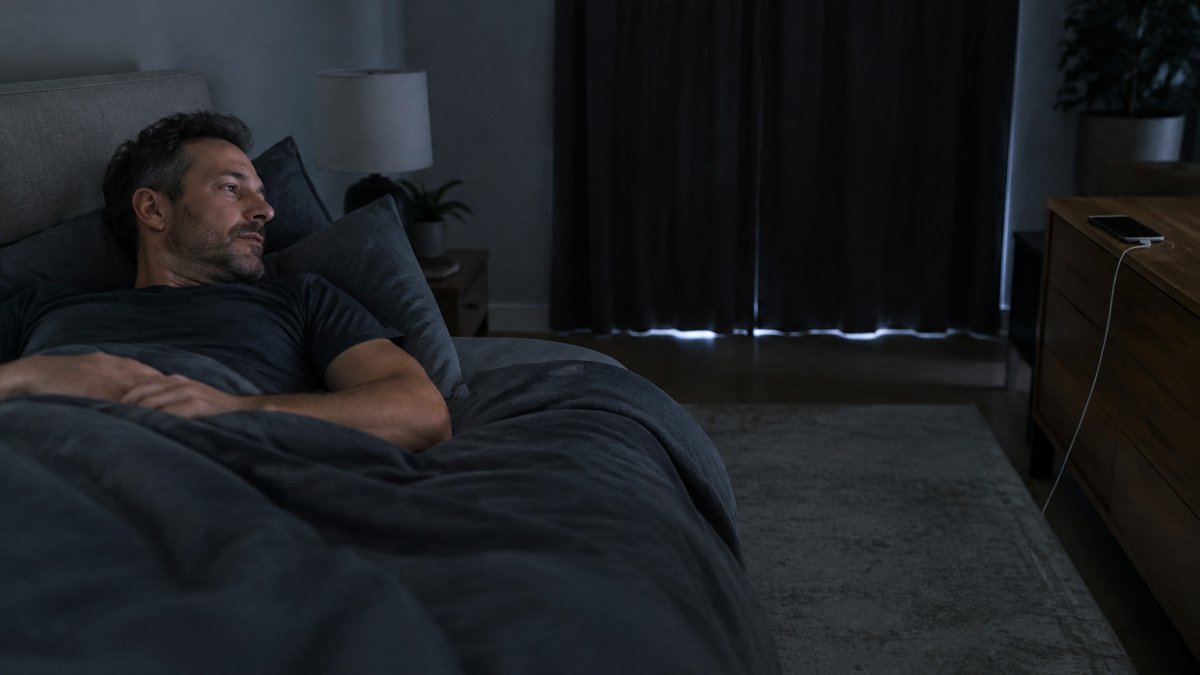
A man in his 40s settling into a dim, cool bedroom is a good picture of this routine. Keep your phone charging across the room so it isn’t in reach.
Watch out: Turning the thermostat down is not enough if your bedding traps heat. Choose breathable sheets and a lighter comforter, because overheating during the night is a common cause of waking in this age group, especially for men who run warm or are experiencing hormonal shifts.
Step 3: Adjust Caffeine, Alcohol, and Evening Routines
What you consume in the hours before bed matters more as you age. Clearance of caffeine and alcohol can slow in midlife, and body composition changes can alter how these substances are distributed. A drink or coffee that barely registered in your 20s may now affect your sleep for hours.
Caffeine can stay in your system for several hours, so an afternoon coffee may still affect your sleep at night. Caffeine can stay in your system for several hours, and its clearance may slow with age.
Alcohol is a common culprit. It may help you fall asleep, but it tends to fragment sleep later in the night. Alcohol can suppress REM sleep early in the night and may contribute to waking later on, which is one reason some men wake during the night after evening drinks.
- Stop caffeine at least 8 hours before bedtime, and consider cutting to a noon cutoff if you are sensitive
- Limit alcohol, especially within three hours of sleep, and keep it to one drink or none on nights you need to recover
- Avoid heavy meals late in the evening, since digestion slows with age and a full stomach can disrupt sleep
- Dim lights and step away from screens 30 to 60 minutes before bed
- Use blue light filters if you must use devices at night
Watch out: Replacing an evening drink with a large glass of water seems harmless, but drinking a lot of fluid close to bedtime can cause nighttime urination, which is already more common in men over 40. Front-load your water intake earlier in the day.
Step 4: Use Exercise and Stress Management to Sleep Better
Regular physical activity is one of the strongest tools for better sleep. Strength training, walking, and cardio all support sleep quality when done consistently. Try to finish intense workouts at least a few hours before bed, since some men find vigorous exercise too stimulating right before sleep. Pairing consistent exercise with steady sleep and wake times can make these habits that work easier to sustain.
Stress is another major factor. Racing thoughts make it hard to switch off at night.
- Try progressive muscle relaxation for 10 minutes before bed
- Write a short to-do list for tomorrow so your mind can let go
- Practice slow breathing, such as breathing in for four counts and out for six
- Keep a regular exercise routine, even if it’s just 20 minutes of walking
Step 5: Recognize Insomnia in Your 40s as a Men’s Health Issue
Occasional bad nights are normal. Ongoing trouble falling or staying asleep, several nights a week for months, is called insomnia. Insomnia in your 40s is often linked to stress, hormone changes, sleep apnea, and medical conditions, so it deserves attention.
Telltale signs include:
- Taking longer than 30 minutes to fall asleep most nights
- Waking often and struggling to fall back asleep
- Waking feeling unrefreshed
- Daytime fatigue, irritability, or brain fog
- Snoring, gasping, or pauses in breathing noticed by a partner
Sleep apnea can affect men and may go unnoticed (Sleep Apnea – Causes and Risk Factors). Ask a clinician about a sleep study if snoring or breathing pauses are part of your picture. Learn how sleep apnea treatment can boost daily energy if you want to know what treatment may change.
Common Mistakes and Natural Remedies to Discuss With a Doctor
Many men make the same few mistakes when trying to improve sleep. Relying on sleeping pills without a plan is one. Pills can cause dependence and may not address the root cause. Another is ignoring symptoms like fatigue or low libido and assuming they are just part of aging.
Natural approaches such as sleep hygiene, exercise, and stress management can help many men. Some men also ask about supplements, but supplement safety varies, and some products can interact with medications. Bring any supplements to your doctor before starting them.
Mention persistent sleep problems, fatigue, mood changes, or low libido to a licensed clinician. These can have medical causes that are worth checking.
Booking Your Sleep and Hormone Evaluation
If sleep problems, fatigue, or low energy have lasted for months, a medical evaluation can give you clear answers. Socal Mens Clinic Virtual offers virtual telehealth visits with licensed California physicians, using a lab-first approach to review your health. The brand’s plans are described as not requiring insurance and as including ongoing medical support.
To get started, book a consultation and bring a list of your symptoms, current medications, and any questions about your sleep or hormone levels. See what to ask during a men’s health virtual visit so you can prepare before you book. Current pricing and plan details are available on our website.
Frequently Asked Questions
Why is it so hard to sleep in your 40s?
Sleep changes with age. Deep slow-wave sleep tends to decline, and nighttime awakenings become more frequent. Stress, work demands, and shifting hormone levels such as testosterone can all contribute. A consistent schedule, a cool and dark bedroom, and limiting evening alcohol and caffeine often help. If poor sleep persists for several weeks or affects daytime energy, schedule a visit with a qualified clinician to look for medical causes.
How much sleep do adults over 40 need?
Many adults need several hours of sleep per night, and sleep needs vary from person to person. Needs do not drop sharply after 40, but many men in their 40s get less than this. Tracking your sleep for a week and noticing how rested you feel during the day can help you judge whether you are getting enough. Persistent daytime fatigue is worth discussing with a doctor.
Can hormonal changes affect sleep after 40?
Yes, hormonal shifts can affect sleep for some men. Testosterone naturally declines with age, and low levels have been linked to fatigue, reduced sleep quality, and mood changes. Other factors such as thyroid function, cortisol patterns, and sleep apnea can also disrupt sleep. Because these causes overlap, a lab evaluation with a licensed clinician is the reliable way to identify what applies to you. Do not start or stop any hormone therapy without medical supervision.
When should you talk to a doctor about sleep problems?
See a doctor if you have trouble falling or staying asleep most nights for more than three weeks, loud snoring with gasping or breathing pauses, excessive daytime sleepiness, or sleep problems alongside low mood, low sex drive, or unexplained weight changes. Bring a sleep log covering bedtime, wake time, caffeine, alcohol, and daytime energy. A clinician can order appropriate testing and discuss safe options, including supplements and their potential interactions with medications.
This article is for general information only and is not medical advice. Talk to a qualified healthcare professional about your symptoms and treatment options.