
Last Updated: November 24, 2026
Quick Summary
Shift workers manage sleep apnea treatment by working with a sleep clinician to adjust the plan to an irregular schedule, protecting a consistent sleep block, and controlling caffeine and alcohol around sleep. A treatment plan works best when it fits the shift, with CPAP used during whatever sleep block you actually have.
- Night and rotating shifts scramble the circadian rhythm, making sleep apnea harder to control.
- Start CPAP at the same point in every sleep period, even when hours shift.
- Allow 20 to 30 minutes to settle in with CPAP before sleep.
- Ask your clinician how the sleep study handles daytime sleep so it captures your real sleep.
- Drowsy driving is a serious risk for shift workers with untreated sleep apnea.
Table of Contents
- How do shift workers manage sleep apnea?
- CPAP for shift workers and daytime sleep
- Getting a sleep study for night shift workers
- Frequently Asked Questions
How do shift workers manage sleep apnea?
Shift workers manage sleep apnea by working with a sleep clinician to adjust their treatment to an irregular schedule, protecting a consistent sleep block, and controlling caffeine and alcohol around sleep. A treatment plan works best when it fits the shift.
Night and rotating shifts scramble the circadian rhythm, making sleep apnea harder to control. Daytime sleepiness can come from the disorder, the schedule, or both.
A practical plan includes a confirmed diagnosis from a sleep study, treatment timed around your actual sleep block, a dark quiet sleep space, limits on late-shift caffeine and pre-sleep alcohol, and regular clinician check-ins as shifts change.
Shift work sleep disorder comes from the schedule itself; sleep apnea is a breathing disorder that needs its own treatment.
At Socal Mens Clinic Virtual, our licensed California physicians use a lab-first approach to build personalized plans based on your biological data. Fatigue in men over 40 often has more than one cause.
Watch out: treating daytime sleepiness with extra caffeine can mask a breathing problem that needs medical evaluation.
Here is a quick summary of the practical steps shift workers can take to keep sleep apnea treatment on track.
| Step | What to do |
|---|---|
| Confirm diagnosis | Get a confirmed diagnosis from a sleep study |
| Time treatment | Time treatment around your actual sleep block |
| Set up sleep space | Keep it dark and quiet |
| Limit caffeine and alcohol | Limit late-shift caffeine and pre-sleep alcohol |
| Check in | Have regular clinician check-ins as shifts change |
CPAP for shift workers and daytime sleep
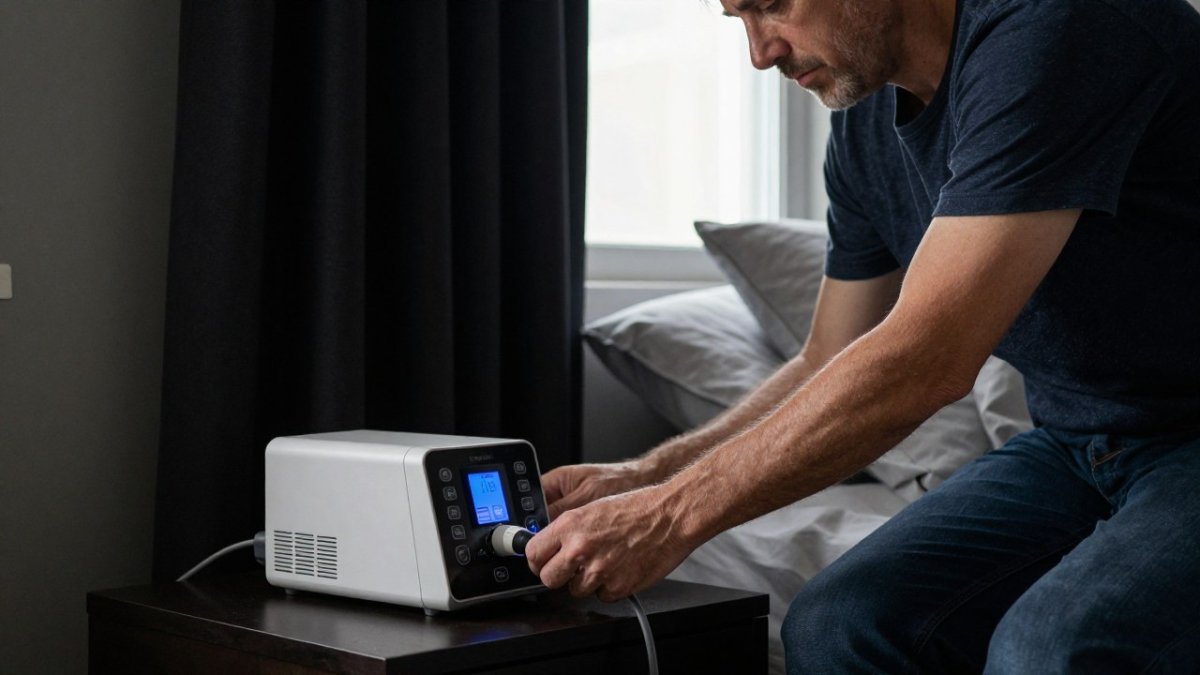
CPAP for shift workers means using the machine during whatever sleep block you actually have. The mask and pressure stay the same; only the timing moves.
Consistency matters more than the clock: start CPAP at the same point in every sleep period, even when hours shift.
Set up the machine before the room gets bright, use blackout curtains and an eye mask, keep the mask clean and the water chamber filled, run a mask fit check each time, and allow 20 to 30 minutes to settle in.
If you rotate between day and night shifts, expect a short adjustment period each time your schedule flips. Your clinician can help you plan for that.
For more on building a rest routine around an unusual schedule, see our guide on how to improve sleep quality after 40.
Getting a sleep study for night shift workers
A sleep study for night shift workers is a monitored test measuring breathing, oxygen levels, and sleep stages. Testing options and scheduling vary by provider.
Ask your clinician how the test handles daytime sleep so it captures your real sleep.
- Your shift pattern and typical sleep hours
- Any snoring, gasping, or witnessed pauses in breathing
- How sleepy you feel during the shift
- Any dozing off while driving
Drowsy driving is a serious risk for shift workers with untreated sleep apnea. If you have nodded off at the wheel, tell your clinician right away.
Treatment does not always mean CPAP; your clinician decides on the appropriate approach based on test results.
To understand what the process involves before you commit, read how it works. When you are ready to schedule, you can contact us directly.
Frequently Asked Questions
Can working night shifts make sleep apnea worse?
Night shifts do not cause sleep apnea, but they can make it harder to manage. Shift work disrupts the circadian system and sleep-wake cycle, which can increase daytime sleepiness and make sleep duration and regularity harder to protect. For someone already dealing with sleep apnea, that combination raises fatigue and health risks. It also makes CPAP adherence harder to maintain. A clinician can help you build a treatment plan around your actual schedule rather than a standard 9-to-5 routine.
Can a sleep study detect sleep apnea if I work nights?
Yes. Tell the sleep medicine team your shift pattern in advance so the study captures your real sleep-wake timing. If your schedule rotates, note that too, because it affects how the clinician interprets sleep duration and daytime sleepiness scores.
Is it safe to work a night shift with untreated sleep apnea?
Untreated sleep apnea raises drowsy driving and workplace safety risks, and night shifts already increase fatigue and reduce alertness. If you have been diagnosed and are not using treatment, talk to a clinician before continuing night shifts, especially if you drive or operate equipment. Other treatment options beyond CPAP may fit some patients, as a clinician determines. Do not self-adjust or stop treatment without medical guidance.